If you’ve been following the cloud space at all you’ll know that hosting provider Rackspace recently lost power twice within a span of 10 days. As NetworkWorld explained:
Power outages on June 29 and July 7 hit Rackspace’s 144,000-square-foot data center in the Dallas suburb of Grapevine. Rackspace operates nine data centers worldwide for about 60,000 customers. Within the Dallas facility, some customers experienced downtime of about 40 minutes on June 29 and on July 7 some customers suffered downtime of 15 to 20 minutes.
During the outages,as information became available Rackspace communicated updates via phone, twitter and their corporate blog.
Last week, two days after the second outage they posted both a blog update as well as this 5 minute video in which their president Lanham Napier explains what happened and what they plan to do about it:
I’m impressed with the way the company has handled these situations and I think its impressive that their president will be working from the Dallas site until the situation is resolved. As he explains, there is no way that you ever going to completely eliminate unplanned downtime. The important thing is how you keep this at a minimum and how you handle and correct an outage when it does occur.
And the rest?
Rackspace is doing quite a bit to make sure that their Dallas facility is fixed and fortified. What I’d also like to hear from them is how they plan to proactively audit their other eight facilities around the world to make sure they are all up to speed.
After the Dallas dust settles maybe its time to make another video?
Extra credit Reading/Listening:
An Interview with Lanham Napier from last year about hosting and cloud computing.
Earlier this week I read an interesting entry from former Sun compadre Ken Oestreich. Ken’s piece entitled, “Why (and How) Low-Cost Servers Will Dominate — Or, why high-end servers will be obviated by software…” explains:
The age of high-end, super-redundant, high-reliability servers is slowly coming to an end. They’re being replaced by volume servers and intelligent networks that “self heal”….folks like Amazon and other mega-providers don’t fill their data centers with high-end HP, Sun or IBM gear anymore. Rather, companies like Google use scads of super-inexpensive servers. And if/when the hardware craps-out, it is software that automatically swaps-in a new resource.
So what’s the punch-line here? I believe that the vendors who’ll “win” will be those who are effective at producing low-cost, volume servers with standard networking… But most of all, the winners will be effective at wrapping their wares in a system that is designed for automatic interchangeability [via software management]. Note I added the last bit
So just remember, in the cloud, nobody knows you’re a server.
The concept of community is one that has been around for quite a while (see image at left).
Originally at least partially defined as a group that shared a common physical location, this term over the last decade, with the help of the Internet, has vastly expanded to include virtual communities. (Obviously other media before the Net like radio, TV, snail mail and smoke signals have helped to knit together physically separated individuals, however the Net has simply done it on a much larger and more immediate scale).
Powering Software and Presidents
As for its power, it was the Community that became the central driver behind a “new” model of Software creation, Free and Open Source Software. No longer was code solely written by a group of engineers holed up in a room and fed pizza by sliding it under the door. It was written collaboratively by a community of mostly volunteers located around the world. And in a very different arena, it was the power of community that recently helped propel our current President to the White House.
Now with tools like Twitter and Facebook new communities are being created by the minute and companies and causes all want to know how to harness and leverage the power of community. Marketing guru Seth Godin has even jumped on the bandwagon with his book “Tribes” an inspiring but content lite work discussing how ideas, people and leaders can be brought together to accomplish big things.
“I’m in charge here” doesn’t work for a Community
Although it may be obvious to some, the most important thing to know about a community is that its about influence and not control. You can’t direct a community to do anything. What you can do is provide great products, ideas etc that your community can get behind, promote and help make better. Its about acknowledging their help and providing the tools and resources to help them help you. As Max Spevack, the former Community Manager for Fedora Linux once told me, “It’s about the power of persuasion and ‘thank you.’” Or as the motto of Obama’s field campaign states: “Respect. Empower. Include.” [Note: this paragraph is recycled from a previous entry]
Learn How to Community
If you want to learn more from the folks actually doing it you may want to check out The Community Leadership Seminar that is being held on July 18-19 in San Jose, CA. The event is the brainchild of Ubuntu Community manager Jono Bacon and is supported by O’Reilly events. As the website says
The event pulls together the leading minds in community management, relations and online collaboration to discuss, debate and continue to refine the art of building an effective and capable community.
In true community fashion the majority of sessions will be an unconference format where the topics for discussion will be decided on the day and will be characterized by discussions as opposed to lectures.
And the cost — FREE. So if you’re heading out to OSCON, which runs from July 20 to 24th, you may want to come out a couple days early. Or you may just want to attend the event. Its got an amazing list of attendees already signed up.
Last month my daughter and I traveled to Chicago for my cousin’s wedding. We had two full days — one gorgeous, warm and sunny and one overcast and bone chilling – so is Chicago, or so I’m told. The first day we hit the zoo which was a great time and then made our way in the late afternoon to the beach.
Now this will not come as a surprise to many people, but it freaked me out — Chicago has a beach! Complete with lifeguard stands and palm trees. Call me a “beachist” but growing up in Hawaii I always thought beaches were only connected to oceans. Well it turns out lakes have them too. So there we were on a beautiful Friday afternoon in the windy city building sand castles on the edge of lake Michigan.
Last week at the Enterprise 2.0 conference I sat in on an interesting session entitled “Does Social Media and Marketing Mater?” The moderator was Peter Kim of the Dachis Corporation and the panelists were Greg Matthews of Humana, Ben Foster of Allstate insurance and Morgan Johnston of jetBlue. Each of the panelist discussed how they were using social media at their firms.
After the panel I grabbed Morgan from JetBlue and did a short video. I’ve broken the interview in two, the first part talks about JetBlue’s social media strategy and how its working and the second part addresses the tools and channels that they use.
Check it out…
Part 1: How and Why does JetBlue use Social Media?
Some of the topics Morgan tackles:
Started the social media engagement back in ’07.
The four reasons JetBlue uses Social media: 1) monitoring, 2) engaging, 3) informing and 4) humanizing.
Social media can serve as “a canary in a coal mine.”
The importance of vetting and confirming information before reacting.
FYI if you want to sneak a folding bike on a plane you no longer need to claim its art or bike parts.
Part 2: What tools, technology and channels does Jet Blue use?
Some of the topics Morgan tackles:
When engaging with customers and communities its important to remember that you are a guest of that community and dont try to bull your way in.
They have a Flickr channel which is populated by crew members and helps to humanize the brand.
JetBlue has a YouTube channel where they feature videos generated by JetBlue
Twitter is their biggest channel (@JetBlue). When I did the interview last week they had 730,000 followers, today they are at 780,000. This is a great way to monitor customer feedback and disseminate information.
Morgan is looking forward to seeing how people adapt and evolve existing tools to fit their own needs.
Last week at Enterprise 2.0 in Boston I caught with Stephen O’Grady, co-founder of analyst firm Red Monk. I’ve always been very impressed with this boutique firm whose influence on their clients and other analysts, seems inversely proportional to their size (they are now up to a whopping four analysts).
I’ve split our chat in two parts. The first deals with the firm itself, and the second with a couple of areas in technology that Stephen is particularly interested in.
The History and Philosophy behind Red Monk
Some of the topics Stephen tackles:
Founding a firm that does things differently (the un-analysts as I like to think of them)
Being open with their opinions and breaking down “pay walls”
“Offices” in London, Seville, Portland (Maine) and Austin, TX.
I was quite chuffed to find that my first freelance piece for The Register was featured on the front page. The piece is a 17 minute podcast and accompanying intro article that covers the conversation I had with XML co-developer and really smart guy, Tim Bray.
Tim was a great interview. Not only is he very knowledgeable but he answers questions very lucidly. Take a listen and see for yourself.
Why's Tim so jazzed about a 20 year-old Swedish Telco language (other than the cool graphics)?
Some of the topics Tim tackles:
The state of the web today.
The evolution of Twitter: Ruby on Rails + Scala + ?
Dynamic languages that rock Tim’s world: PHP? Python? Ruby on Rails? Closure?
And speaking of dark horses, what about Erlang? dealing with wider CPUs and concurrency.
Is Google’s Wave the next Twitter or the next Lotus Notes?
What’s happening in browser land? And what about HTML5 (video and canvas)?
Opera’s recent announcement and the value of web hooks.
Tim’s been “Kindled.” What other web business models are working out there?
What most rock’s Tim’s world: 1) Databases duking it out – what’s the right way to persist data at scale and 2) Mobile platforms: Android, iPhone, Palm Pre — all very different approaches.
Shout outs: To Terri Molini for setting this up and Paul Bonser of X-team for introducing me, over beers, to Erlang.
I’m attending Enterprise 2.0 here in Boston and although it’s relatively small, I’m finding it pretty interesting. Case in point, James Duncan, Joyent‘s Director of platform strategy. James is staffing Joyent’s pod at the event and an hour ago I dragged him away for a quick podcast.
Some of the topics James tackles:
How James got into the cloud in the first place.
From Fotango to Zimki to Canon to Ski bum (and his connection with Canonical’s Simon Wardley).
How a bad experience with Ruby and an epiphany with the Git version control system made him “Reasonably Smart“
What he see’s happening in the cloud in the next 12-24 mos.
How he enjoys the immediacy the cloud brings of taking a concept from idea to deployed app in hours rather than days and how, at the push of a button, it allows you to “hang your bits out for judgement.”
Tuesday I listened in on the RighScale webinar: How to Build Scalable Websites in the Cloud. This is part two of my thoughts and notes from the event. (Note: it doesn’t look like it’s been posted yet but it should be available here soon).
The clouds providers that Right Scale works with.
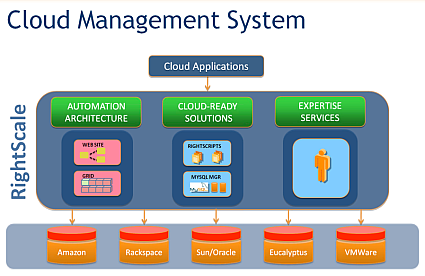
As I discussed last time, RightScale acts as a management platform between cloud providers and Apps.
Which Cloud Providers do they work with?
If you double click on the IAAS bit in the yesterday’s slide you get something like the above. Right Scale works on top of Amazon, coming soon to Rackspace’s Slicehost, Sun/Oracle’s cloud), Eucalyptus theEC2-compatible open source alternative that allows you to set up “private clouds” (BTW as anyone who attended Austin Cloud camp knows I’m using “private cloud” under duress, Gordon Haff does a good job explaining my heartburn) and VMWare.
Linux more robust than Windows
When asked about OS’s supported the answer was Windows as well as Ubuntu and CentOS. Their CEO did admit that currently Windows support is not as robust as Linux. They actually began with CentOS and according to one of their team have recently begun supporting Ubuntu more fully. When I asked about other Linux flavors, Debian, SuSE etc. they said that there were “licensing issues” standing in the way. I should have asked about OpenSolaris 🙂
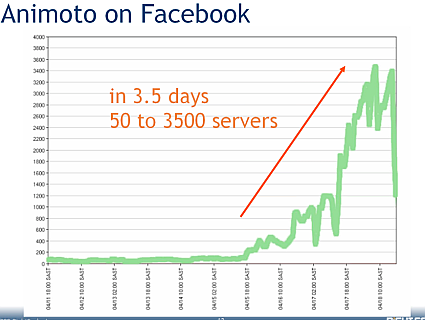
Animoto, the well used example of how server demand can explode.
Why do you look to the clouds?
During the webinar they polled the 200 odd attendees: “what’s driving you to the cloud?” The results (as you’ll notice, you were allowed to vote for more than one):
80% Scalability
73% Cost Savings
59% On Demand access
28% Back-up and recovery
06% Other
Not surprisingly Scalability came in number 1. As if to underscore the point they brought out everbody’s favorite case study of exploding demand, Animoto. Thankfully they had another example of uneven demand, iFixit (see below). As an aside, one example I’d like to see charted is the attendee who mentioned that their agency is responsible for posting election results and were “not prepared for the interest worldwide, for Proposition 8.”
It was interesting to see that cost savings came in a close second, its always hard to measure particularly over the long haul but the perceived cost benefit is definitely strong in most folks mind.
iFixit's traffic could be said to be a tad "spikey."
Right Scale fighting for Server voting rights
And in conclusion…I’m always intrigued with the way English language morphs and evolves so I thought it was really interesting how the word “vote” is being used in the cloud (or at least by RightScale). Basically they use a “voting process” when scaling. Here’s how one of their team explained it.
Once a machine hits the scale up threshold it places a vote to scale up. When enough machines vote to scale up i.e. 51% if that that is what the decision threshold is set at, then new servers are provisioned and configured. The same goes for scaling down.
Don’t know if this usage is new or a throw back from mainframes or from some other industry but I like it.
Yesterday I attended a webinar that RightScale put on entitled: How to Build Scalable Websites in the Cloud. It was basically a welcome to RightScale, welcome to the cloud presentation but overall interesting and credible.
The presenters were their CEO, their head of marketing and a mini team of techies. Below is part one of some of my thoughts and takeaways. But first a slight digression…
Enter the Dolphin Master
One thing I noticed during the presentation and which warmed my heart was that MySQL played prominently in a bunch of the slides. It was only today when I was poking around the RightScale site that I saw the press release from a few weeks ago announcing that Marten Mickos, former MySQL CEO and Sun employee joined the RightScale board of directors. Its interesting but not surprising to note in the release that Marten calls out Sun and Canonical (the commercial sponsor behind Ubuntu) as two strategic partners helping to expand the RightScale ecosystem.
Where Right Scale fits within the tri-sected cloud.
Where they play in the Cloud(s)
RightScale positions themselves as a cloud management platform or as I like to think of it “a cloud tamer.” If you split the cloud in three — software as a service, platform as a service and infrastructure as a service — they play in the last space. Basically Right Scale sits on top of Infrastructure as a Service (IAAS) and can handle all the tricky bits so you don’t have to.
Choose or choose not to choose
For those who want more control over their infrastructure RightScale will allow you to “choose among a variety of development languages, software stacks, data stores and cloud providers.” For those less intrepid in the cloud they have server templates that you can start off with.
One of the key benefits they stressed was getting rid of vendor lock-in, “so that you never get locked in to a single provider.” You’ll notice on the X axis above they show lock-in decreasing and portability increasing as you move to the right. My question however is that with Right Scale aren’t you simply locked in to a different layer of the cloud? Doesn’t the control point simply move up the stack? Just wondering…
My blogging has been a bit anemic lately. We had our big Blueprint launch in the middle of last month accompanied by the post launch clean up of all the stuff I had designated as “get to it after the launch.” And then there was strep throat and visiting relatives…blah…blah..blah.
So here I am back in the saddle and finally getting around to posting my slides from Cloud Camp Austin where Lombardi Blueprint was a gold sponsor. You’ll notice in the transfer to slideshare, some of the formatting is off and in slide 6 you don’t get to see the great build where the poor person collecting the process data gets buried under a mound of random documents – but you’ll get the idea.
To get some of the narrative behind this and more, check out the interview Redmonk’s Michale Cote did with me at the event.
But wait, there’s more…
For those brave enough to go beyond the last slide you’ll get a special bonus slide of all the cheesy 80’s bands used as code names for Blueprint’s releases right up to the the most recent, “Survivor.”
A little over two weeks ago the latest Blueprint update, the Spring ’09 release, was loosed upon the world. We took the opportunity of the launch, which included launches for our other products and services, to overhaul our web pages. In the specific case of Blueprint we created new pages for Overview, Features, Resources and Success Stories.
You gotta see it to believe it
For the top of the Overview and Features pages we created the following video that presents a 3 minute and 18 second overview of Blueprint. (I recommend you click the full screen button so you can see the details). Check it out and let me know what you think 🙂
Dave Angelow, adjunct professor at Texas State University just finished teaching a semester long course in Production and Operations Management. The course, which focuses on the supply chain and value chain as well as some production methods, is a core requirement in the school of management.
I talked with Dave to hear how the course went and how BPM fit into the syllabus.
How a fair number of students also have day jobs (the course is taught at night) and how this allows them to directly apply what they’ve learned.
How BPM, both Business Process Management and Modeling, fit under the quality management section
BPM as a means of compressing cycle time and extracting more value for customers.
Using Blueprint for a hands on modeling exercise and value the students saw in the tool.
Blueprint Educational Program
Lombardi provides free Blueprint subscriptions for educational use. If you are teaching or taking a course where you think Blueprint would be appropriate, please contact us at blueprint@lombardi.com to learn more.
The week before last I attended the APQC’s Knowledge Management (KM) Conference in Houston. A lot of the discussions focused on web 2.0 technologies as ways of transferring and sharing knowledge and process throughout organizations — wiki’s, blogs, chat and social networks came up a lot.
The conference also had a great line up of keynotes which was kicked off on the first day by Chris Meyer, “part economist, part technologist, part futurist, and the founder of Monitor Talent, a part of the Monitor Group.” I grabbed a few minutes with Chris while he was waiting for his cab to the airport.
Some of the topics Chris tackles:
The concept behind Monitor Talent
One of the trends that frame knowledge management is the availability of talent that doesn’t work for you. Accessing this talent isn’t optional any more, it’s the way to compete.
Those who see this merging of inside and outside as threatening still view business as a zero sum gain as it had been in the past compared to the positive sum gain that it is now.
The “wikification” of work
The book Chris is currently working on and how the growth in the next 15 years which will come from outside the G7 nations will affect mainstream capitalism as we know it.
One of the advantages of a cloud-based application is that product improvements can be streamed to customers in frequent and regular intervals.
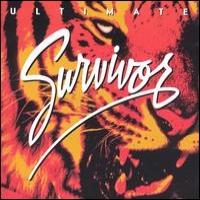
In the case of Blueprint we tend to put out a new release every 6-8 weeks. But just because the updates come regularly doesn’t mean that they’re all equal, some releases are bigger than others. The Spring ’09 release that went live over the weekend is definitely one of our biggest. (BTW: In case you’re wondering what’s up with the tiger above, following our code name schema –an alphabetic listing of cheesy 80’s bands — this release was code named: Survivor.)
What’s the Big Idea?
The idea behind Blueprint has always been to provide a tool that was easy-to-use and collaborative so that the people actually involved in a process, as opposed to just the process ninjas who could work the complicated tools, could contribute directly to the documenting and improving of their process. With Saturday’s release, however, we’ve taken these concepts “to 11.”
Participants
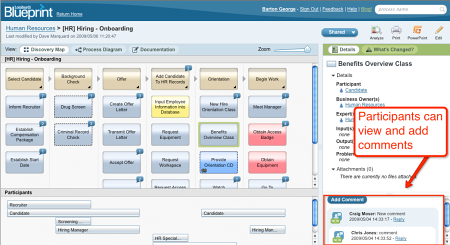
To make Blueprint available to an even wider audience, we have introduced a “Participant” view. Unlike the “Author” view that allows users to create, edit and comment on processes, the participant view presents the user with read-only views that they can annotate and comment on.
The number bubbles on the boxes let viewers know the number of comments on each step.
The new participant licenses are perfect for taking Blueprint beyond your organizational walls to partners and suppliers who are integral to your processes and can give you valuable feedback on how they are actually working, or not working, as the case may be. The participant view also works well within your org for those people who may not have the time to map or edit a process but have the time and knowledge to give feedback.
Getting Social (er)
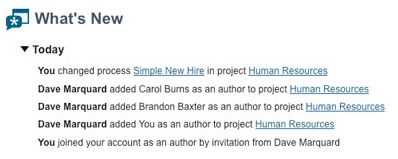
Although Blueprint has featured built-in IM chat since its beginning, we have borrowed more from the world of Social Media for the latest release. As soon as you login, you’ll notice that like Facebook, you are presented with a list of those processes that you are associated with that have been published, changed or commented on.
This new Activity Feed helps you to discover relationships between what you do and the rest of the company. Now you’ll know when something changes two steps upstream from you that will affect your job, or that the person in the next building over does something similar that you leverage.
Back to the Big Idea
With Saturday’s release, now more than ever, Blueprint takes the practice of process from the hands of the few and spreads it through out your and your partners’ organizations. It in effect becomes the central communication platform for collecting, sharing and improving how work gets done in your organization.
But don’t take my word for it, sign up for a free 30-day trial and see for yourself. 🙂
PRC, based in Ft. Lauderdale, Florida, manages 14 domestic call centers and a handful of centers offshore. In January of last year this 25-year-old company declared bankruptcy. Six months later, after a massive restructuring they emerged from Chapter 11.
One of the efforts that helped in this restructuring and which continues today is an effort to document, standardize and communicate all of the company’s processes.
Rachel Pace-Maron, Director of Operations Support Service was asked to lead this effort with a shoe-string budget. Last week I chatted with Rachel to learn more about her effort.
The goal with mapping PRC’s processes was to find out how they could do things better and faster and why things take so long. They weren’t able to answer why a process took so long because no one person knew every step. This is what lead them to process mapping.
One of the first processes they mapped was “agent time,” how much time do agents spend on break and what is the management process for keeping them on the phone efficiently and within break parameters.
They found each call center had a different process and none were doing it efficiently.
By standardizing on a process for all centers and bringing them into metric, they had a bottom line impact on revenue.
Before adopting Lombardi Blueprint for process mapping, groups had been using, Visio, Exel and Power Point.
PRC has a group of people who are visually oriented and a group who are narrative oriented. As Rachel explains, “Blueprint’s ability to marry picture to narrative has been fantastic and, I’m not going to say life altering, but certainly business altering.”
Her excitement over the latest Blueprint release and how the addition of participants will help PRC break down silos and take their process initiative to the next level.
Last year I did a podcast with Mosso (“The Rackspace Cloud”) co-founder Jonathan Bryce. Last Saturday at Cloud Camp Austin I caught up with the other co-counder of Mosso, Todd Morey to get his side of the story.
Some of the topics Todd tackles:
How Todd and Jonathan formed a good partnership, Todd on UI and design and Jonathan on the development side.
Starting Mosso out of a desire to have place where they could run their code without having to worry about the infrastructure.
Mosso’s integration back into Rackspace
Will Mosso bring some of its hipness to Rackspace? (editorial note: looking at the Rackspace’s site it looks like Mosso has already influenced it for the better)
At Austin Cloud Camp on Saturday I ran into Ubuntu linux developer and Canonical employee, Dustin Kirkland. Dustin is on the server developer team at Canonical and, as he explains it, focuses on various aspects of virtualization, the plumbing layer below cloud computing. I grabbed Dustin for a few minutes and chatted with him about last week’s release and what he’s been working on.
Michael Cote of Redmonk welcomes us all. (credit Dave Nielsen)
This past Saturday, Cloud Camp Austin was held down on the UT campus. There was a very healthy turnout and a lot of great discussions were generated.
Sequence of Events
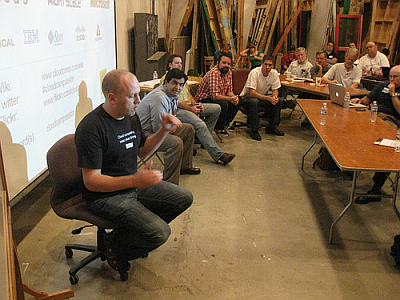
After opening salutations, camp got underway with a series of six five-minute lightening talks delivered by the camp’s gold sponsors.
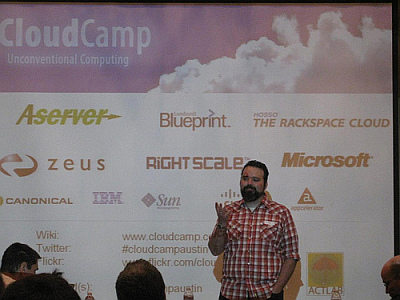
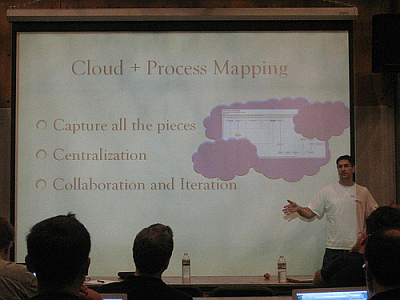
My lightening talk: Mapping Processes in the Cloud (credit: Dave Nielsen)
The Main Event
From there, Dave Nielsen, the man who originally developed the cloud camp format (and who took most of the pictures in this post — see them all), guided us through the process of coming up with topics for session discussions. That process, appropriately enough given that this was an unconference, began with an “unpanel.”
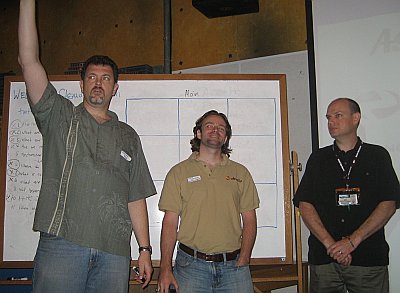
The Unpannel: Michael Wilde of Splunk, (not sure), Dustin from Canonical, Cote, myself (credit Dave Nielsen)
All Together Now
The way it worked was the room first brainstormed a list of topics they were interested in discussing/learning more about. Anyone who thought they were an expert on one or more of these topics got to get up from their seats and form a five person panel at the front of the room. Each member of the panel then answered two questions from the board and as the question was answered the audience was asked if the topic had been covered by the answer or if it warranted further discussion in an afternoon session
(L->R) Dave Nielsen leads us through our unconference set up. Canonical's Dustin Kirkland and hero-for-hire John West lend a hand.
A Schedule is Born
After the panel, as a group we all decided what the final sessions would be and who would lead them. To lead a session you could either be knowledgeable in the area or completely clueless but wanted to learn about it.
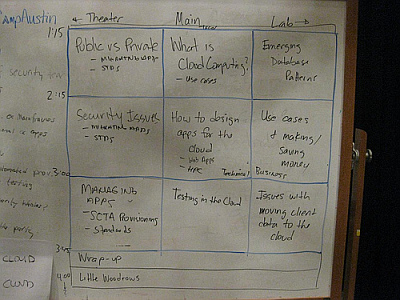
The completed schedule: three sessions ran at a time and there were three time slots (credit Dave Nielsen)
Coming Soon
While at camp I did a couple of video interviews, one with Dustin Kirkland of Canonical and one with Todd Morey of Mosso/Rackspace. I should be posting those in the next few days. I also found myself on the other end of the microphone being interviewed by Mr. Cote. That should be appearing in the near distant future on his blog.
To get some insight into the release and what it means, I grabbed some time with Simon Wardley of Canonical. Simon, who joined Canonical near the end of last year, is the person tasked with looking into cloud computing for the company in order to figure out what it means for them, what it means for the industry and ultimately, determining what Canonical should be doing about this change that’s occurring in our industry.
Simon Wardley, setting the controls for the heart of the cloud.
Some of the topics Simon tackles:
How did Simon get his present job and what was he doing before?
When looking at adopting cloud computing three risks need to be evaluated
The risk of doing nothing (which should be balanced against the next two)
Transitional risk
Out sourcing risks
Cloud standards will emerge through the marketplace rather than via committee
Why Ubuntu went with Amazon EC2 and Eucalyptus.
Today’s release is a technical preview, “a starting point in a journey.”
For the “Karmic Koala” release due in October, they will be focusing on persistency, policies and portability. They are also working with a bunch of management tool providers to allow users a choice of how they want to manage their environment.
Whats coming next year in the cloud space:
A hybrid model: Private clouds that allow bursting between them and public clouds.
Portability between providers will become a big issue.
A lot of standardization at the infrastructure layer of the stack
An explosion of innovation
The IT department will face real governance issues
Open source will continue to be critically important


 Posted by Barton George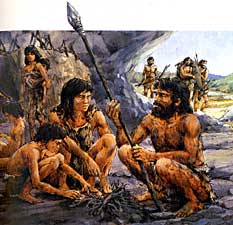







 Barton's Blog