It’s 2009 and most of us appreciate the power of the community. It has been what has driven the ascendancy of free and open source software. It is what helped propel our current President to the White House.
Although it may be obvious to some, the most important thing to know about a community is that its about influence and not control. You can’t direct a community to do anything. What you can do is provide great products, ideas etc that your community can get behind, promote and help make better. Its about acknowledging their help and providing the tools and resources to help them help you. As Max Spevack, the former Community Manager for Fedora Linux once told me, “It’s about the power of persuasion and ‘thank you.'” Or as the motto of Obama’s field campaign states: “Respect. Empower. Include.”
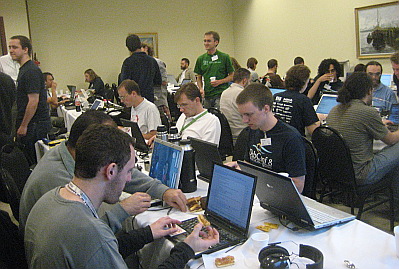
Hackers working on Debian GNU/Linux, an entirely community built distro. (Source: My pic from Debconf8 in Argentina).
Does it work elsewhere?
So the power of community is now recognized in the development of open source software as well as in the marketing of a presidential candidate. What about in the marketing of open source software?
Various software communities do look to members to help with many aspects of marketing, just ask Jono Bacon community leader for Ubuntu Linux or Zonker Brockmeier of OpenSUSE. What I haven’t seen however is an actual marketing guide developed with and for the community. That is until yesterday (there must be another community that has such a guide, I just cant think of any).
Strange things happen up in Oregon. (Read how OSU students did this.)
Gettin’ better all the time
The guide like many resources for the community, and following the Web 2.0 tenant of the “eternal beta,” is positioned as work in a progress that will be added to and updated.
I think this is guide is a great idea to help the community help Mozilla. One of the the greatest value I see in this is, by show casing the efforts of community members it helps to give others ideas and motivate them. I will be very interested to see how this grows and is used going forward.
Although the power of the community is now recognized it is fascinating to see the tools and tactics that are being developed to further support its members and harness their energy. This is a space is one to keep an eye on and watch develop as it becomes more and more mainstream.
Last month we held our company kick off where all 200+ of our employees from all around the world gathered here in Austin for meetings to get set for the upcoming year. One of the highlights of the three days was the 4th annual Lombardi Science Fair.
The official program and ballot.
Each year, people are given a couple of weeks during work time to work on a project that extends the base platform of Blueprint or Teamworks in some cool new way. As the official Science Fair rules state: “Anyone at Lombardi can enter… all you have to do is think up a project, register the project on the wiki page build the project, and show up ready to pitch your project on January 27!”
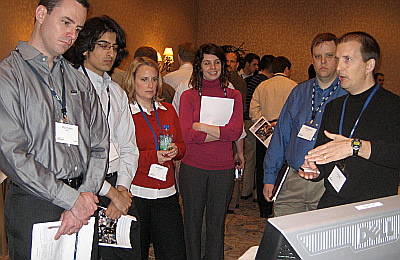
Two of the four winners, Scott and Allison and MC Phil previewing the grand prize.
This year there were close to 40 projects and awards were given in three different categories as well as one project that was picked as “Best in Show.” The winners received iPod Nanos and the Best in Show was the recipient of $1,000 in cold hard cash. Not only that, but all of the winners will be show cased at Lombardi’s upcoming customer event, Driven.
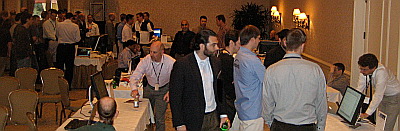
The Fair commences.
Everyone Wins
The real cool thing for customers, Lombardi and the entrants is that a lot of these out-o’-the-box projects find their way into the products over the coming year.
This was my first time at Science Fair and I was really impressed with, given the size of Lombardi, how elaborate the whole shebang was. Nice way to keep innovation pumping.
I came across a pretty funny article in last week’s Time magazine that explained the reason why all of a sudden my old classmates from high-school, college and business school are coming out of the woodwork and joining Facebook. The sub-title (which is missing from the online version) best sums up the phenomenon:
It was designed for college kids. But it took legions of people their parent’s age to fulfill its ultimate destiny.
The article illustrates that the greatest value of Facebook comes not from facilitating connections, but facilitating re-connections.
Facebook is for Old Fogies
Here are the 10 reasons that the author, Lev Grossman, lists to support the above thesis:
Facebook is about finding people you’ve lost track of.
We’re no longer bitter about high school.
We never get drunk at parties and get photographed holding beer bottles in suggestive positions.
Facebook isn’t just a social network; it’s a business network.
We’re lazy.
We’re old enough that pictures from grade school or summer camp look nothing like us.
We have children
We’re too old to remember e-mail addresses.
We don’t understand Twitter.
We’re not cool, and we don’t care.
The article is short and you should read the whole thing. That is of course unless you are an old fogie whereby #5 will stop you.
The latest Blueprint update debuted this weekend. Being a cloud-based application we are able to push out a new Blueprint release every ~6 weeks and drive continuous improvement in the product. (In case you’re wondering about the picture to the left, each release comes with its own cheesy-band code name. As you can probably guess, the code name for this release was REO Speedwagon).
We’re Listening
In this latest Blueprint release we tackled the top three customer requests we’ve heard over the past few months on the forums and out in the field:
Autocomplete revamp
Swimlane improvements
File attachments and the word export
If you can spare 1 minute and 18 seconds, check out the video that Blueprint Product Manager Dave Marquard put together that takes you through the new features.
For more details on the release, check out Dave’s entry.
Coming Soon to a Browser near you
What’s next? Well alphabetically we are up to “Survivor” and its gonna be a cool one. It’s coming out party will be in April at our Driven 2009 user conference. Until then, you keep up with the latest and greatest in the world of Blueprint by following us on twitter.
When I was at the Computer History Museum last month to attend Cloud Connect, I came across a familiar name outside one of the doors. Turns out that Proffesor Richard Tedlow had recently set up shop as the museum’s first resident scholar. Although he wasn’t my proffessor I definitely remember the name from my time at business school. I decided to knock on his door and find out what he was working on.
To watch in High Quality: after clicking play, click the “HQ” button that will appear on the bottom.
Some of the topics Professor Tedlow Tackles:
His work around the Intel 386 processor.
Harvard Business School’s case-writing outpost on Sand Hill road.
How technology has effected the business school and using YouTube in class.
At the end of last year, Blueprint Product Manager Dave Marquard and I had a call with Forrester analyst Clay Richardson to brief him on Lombardi Blueprint. The result of that call and a considerable amount of further research was a 6-page report that debuted last Friday — “Vendor Snapshot: Lombardi Blueprint Bridges Gap Between Process Discovery And Execution.”
Austin-based Lombardi Software’s latest offering, Blueprint, positions the vendor to extend its leadership in human-centric business process management (BPM) and takes direct aim at Microsoft Word, PowerPoint, and Visio as the tools of choice for process analysts. Blueprint provides a process modeling and discovery platform that blends collaboration and documentation capabilities into an easy-to-use, low cost, software-as-a-service offering that can be used by beginner to expert process analysts. To stay ahead of the pack, the platform needs to continue extending its collaborative Web 2.0 functionality as other BPM suite vendors play catch-up by introducing similar offerings. Consider Lombardi Blueprint if you need a collaborative and lightweight process discovery tool that is tailored to support geographically dispersed process discovery teams.
We are in the process of licensing this report and as soon as we do, we will be making it available on the lombardi.com site. If you are already a Forrester client, you can log in access the report here.
Salesforce.com was one of the Platinum Sponsors at Cloud Connect. I stopped by their booth and had a quick chat with Kavindra from developer marketing, Ash, a Force.com evangelist and Ryan a technical marketer.
To watch in High Quality: after clicking play, click the “HQ” button that will appear on the bottom.
Some of the topics Kavindra, Ash and Ryan Tackle:
Speed Geeking and Chalk Talks.
Why Force.com is great for building enterprise Apps.
Yesterday I chatted with Dr. Joyce Statz who has been teaching a course at St. Edwards University in its school of management and business. Her course, “Multiple project and portfolio management” is offered as part of the Masters of Science in Project Management degree, and teaches how to manage multiple portfolios of project work in an organization.
I recently learned that Joyce introduced Lombardi Blueprint as a tool within her class and had a lot of success. I called her up to learn more.
Who are the students that make up her class and what are their backgrounds?
Mixing concepts with hands-on exercises
Replacing Visio/Word/Excel in the classroom
How the strongest Visio advocates at the beginning of the term became the biggest Blueprint champions at the end of the course.
Blueprint Educational Program
Lombardi provides free Blueprint subscriptions for educational use. If you are teaching or taking a course where you think Blueprint would be appropriate, please contact us at blueprint@lombardi.com to learn more.
When I was out at Cloud Connect, I met Dan Woods who writes the Jargon Spy column for Forbes.com. Turns out Dan has a particular soft spot in his heart for BPM and I was able to give him a quick demo of Lombardi Blueprint. The result was his piece that came out yesterday, “Stalking and Capturing a Business Process — We need a process for creating business processes.”
Be vewy, vewy quiet, we’re hunting pwocesses
Dan is clearly sold on the value of business processes and BPM:
“For large and small firms, the business process is the right way to think of what to do and how to do it better, whether or not it is automated or supported with technology. BPM puts the focus where it should be–on what you must do to make your company successful, not on the capabilities you happen to have.”
What he wants to know however is how are these processes captured in the first place? If the processes being submitted aren’t of quality, how can you expect the BPM results to be? Garbage in, garbage out.
Incremental and Collaborative…that’s the ticket
Dan argues that developing the processes incrementally is the only way you can be assured of solid inputs. The three approaches he advocates are: Wiki-based process discovery, Task-based process discovery and Mash-up based process discovery. And this is where the Blueprint shout out comes in:
Lombardi Software has recognized this trend and recently launched a Web-based service called “Blueprint” that allows for collaborative brainstorming and definition of processes. Using this service, you start with a bunch of ideas and can end up with a nice diagram. The JargonSpy imagines such a system could be used as the scratch pad for capturing and refining the processes that emerge in the other three methods.
Thanks for the mention Dan, and thanks for pointing out the importance of iterative and broadly inclusive input collection up front. For without that, are we not building our BPM castles on diagrams of sand?
On the second day of Cloud Connect I caught up with Kevin Gough of Google. Kevin leads marketing efforts for Google Apps, website search, enterprise search and geospatial products and we chatted a bit about the evolution of the Google Apps team.
To watch in High Quality: after clicking play, click the “HQ” button that will appear on the bottom.
Some of the topics Kevin Tackles:
Growing the Enterprise team from less than 20 to over 500.
The evolution from Search -> Maps -> Earth -> Google Apps (Google’s thrust into the cloud for businesses)
Python and App Engine, going with what’s familiar and plans to expand
The week before last, the Cloud Connect event in Mountain View kicked off with an “Evening in the Cloud.” Representatives from Google, Amazon Web Services, and Force.com pitched heads of IT on why they should move all their IT to the cloud. (Not sure who convinced whom, but it was an interesting debate nonetheless 🙂 )
Representing Google was Ragen Sheth, its lead Product Manager and the person credited with inventing Google Apps. After he finished speaking I was able to grab a few minutes with Ragen to learn more about what Google’s been doing in the Cloud. Check it out.
I grabbed some time (2:31) with Alistair after his panel to follow up on a comment he made during the session regarding meta-data in the cloud and who owns it. I also asked about his predictions for ’09.
To watch in High Quality: after clicking play, click the “HQ” button that will appear on the bottom.
The first full day of Cloud Connect last week in Mountain View began with a panel discussion on standards and the cloud. One of the panelist was Sam Charrington, the VP of product management and marketing at Appistry. I was able to grab a few minutes (2:37) with the affable Sam after his session and talk a little about Appistry and how they play in the cloud.
To watch in High Quality: after clicking play, click the “HQ” button that will appear on the bottom.
Some of the topics Sam Tackles:
Offering a cloud platform delivered as software and tailored for enterprise users (think Google app-engine available as software and deployable on your cloud platform of choice e.g. private clouds or Amazon EC2 or GoGrid.
Freeing customers from lock-in and elevating the customer experience from managing individual virtual instances.
Last week at Cloud Connect I was able to grab a few minutes with my old boss from Sun, Ian Murdock. Ian, the founder of the Debian Linux distribution, came to Sun to lead the Open Solaris charge and after that tackled Developer relations. Turns out that with the latest Sun re-org Ian has now landed in the Cloud Computing group as the VP of Strategy.
To watch in High Quality: after clicking play, click the “HQ” button that will appear on the bottom.
Some of the topics Ian Tackles:
How cloud computing today reminds him of the Open Source world back in 1993 when he first got involved with Linux and Free Software.
What might be the equivalent of the Linux distro in the cloud space.
The importance of standards and how Sun might play there.
Ok well maybe its not live but here’s a short (3:34) video I shot yesterday with David Berlind, the man behind Cloud Connect. The conference kicked off Tuesday night and continues, as I type, until this evening.
To watch in High Quality: after clicking play, click the “HQ” button that will appear on the bottom.
This video was shot right in the middle of the “speed geeking” section yesterday where attendees visited nine different cloud demos being presented by the sponsors: Amazon Web Services, IBM, Mosso, Google, Right Scale and Salesforce.com.
In the Video David talks about
The idea behind Cloud Connect and whats going on
Where the cloud works best
His predictions for whats going to happen in the cloud space in ’09 (hint, watch out for the big boys).
But wait, there’s more…
If you’re interested in hearing more from Cloud connect Check back here over the next week since I’ll be posting about six more videos as well as an audio podcast with the founder of Google Apps.
Today’s the day that the former Punahou School student pictured below gets sworn in as the 44th president of the United States.
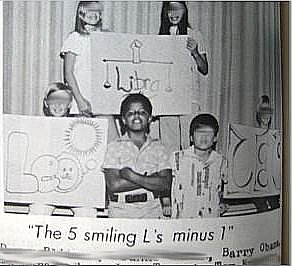
Barack "Barry" Obama in 6th grade at Punahou.
A couple of weeks ago there was a great article in the Washington Post about Obama and Punahou. As the article mentions, at the end of the Obamas’ vacation in Hawaii last month, Barack went back to Punahou and shot hoops.
Obama started at Punahou, which runs from K-12, in 5th grade and graduated in 1979. (I trailed him by three years and remember him as one of the cool seniors when I was a freshman.)
The Punahou Marching band will even be part of today’s inauguration ceremony, playing “Men of Punahou” and “Aloha Oe.” I heard on the radio that the brass section was practicing for the cold conditions by putting their mouth pieces in the freezer overnight.
Last night when I was checking my Google Alerts, I came across a job description for a Process Modler/Analyst position. In the Requirements Section it stated: “Experience with Lombardi Blueprint a plus.” It looks like Blueprint has arrived 🙂
Blueprint recognized Across the Pond
In other Blueprint related news, at the end of last year there was an article in ComputerWeekly.com in the UK about how Blueprint was used by a “US dairy giant” to overhaul its processing. The article focused on the Web 2.0 nature of the solution:
A huge dairy cooperative in the US, which supplies the likes of Wal-Mart, Safeway and Costco, has taken hold of Web 2.0 technology in order to reengineer its whole business.
Change came with the arrival of a new chief executive officer, who identified that IT could bring massive efficiencies to Tillamook in the form of business process management (BPM).
He gave Burge and his IT team his backing to investigate Web 2.0 technology, to see how it could be used to identify, capture and optimise the firm’s “tribal knowledge”, and drive down inaccurate information.
Tillamook examined several applications, including diagramming tool Microsoft Visio – which the firm found too complicated for its needs – but eventually chose Lombardi Blueprint.
Blueprint is at an inflection point right now. With the economy in the shape its in right now, we are seeing quite a bit of interest in a solution that can be paid for on a monthly basis and help drive costs down and efficiencies up.
I have recently been tagged by the Sardinian Data Charmer, Giuseppe Maxia to reveal 7 facts about myself. Last time this request for self-truth (see rules at the bottom of page) went around the blogosphere I had yet to start my illustrious blogging career . Well this time I’m ready!
Here we go:
I was born in the same hospital as Barack Obama, Kapiolani Hospital in Honolulu. (Actually some may know this because I’m part of a Facebook Group “Barack Obama and I were born in Kapiolani Hospital”).
I hate beets. I consider myself a very adventurous eater but I draw the line at beets.
When I was in sixth grade Beverly Cleary visited Hawaii and gave a reading at the Kaimuki library. Each school got to send a boy and a girl. I was chosen as the boy to represent Punahou (I can’t remember the girl)
In 1975 I appeared in Sports Illustrated in the Faces in the Crowd section for weightlifting (I was 10 and lifted 120 pounds). This is the stuff you do when your dad is an Olympic Champion. The “person” pictured to the left of me was a dog (I can’t remember his/her accomplishment).
I’ve had all five of my wisdom teeth out. Yep, that’s right, five. I hear that one in every one hundred thousand people has an extra vestigial wisdom tooth. I guess we’re just less evolved. Who knows, had a lived at a different time or lived in a different society I might have been worshiped as a deity. You never know…
The seven folks I tag are:
Mark Shuttleworth: Mr Ubuntu and part-time cosmonaut; A lot has been written about his grand experiences I have a feeling he’s got some pretty interesting mundane ones.
Andy Lark: A big Kahuna of marketing at Dell and former Sun compadre.
Mako (Benjamin Hill): FSF Board member and self-proclaimed rebel with too many causes.
Phil Gilbert: Lombardi’s President and CTO who I have a feeling has some pretty interesting facts to list.
Charlene Li: Social and emerging technology guru who recently set out on her own.
Mark Herring: Former boss at Sun who needs to be goaded back into blogging. Maybe this will help.
Sandy Kemsley: BPM, E2.0 and more analyst and systems architect whose blog I read but have yet to meet.
Ignore at your peril!
Be forewarned, one gentleman in Austria who ignored the tag, lost the cap to his toothpaste, never found it and the whole tube dried up!! Don’t let something like this happen to you!
The rules:
Link your original tagger(s), and list these rules on your blog.
Share seven facts about yourself in the post – some random, some weird.
Tag seven people at the end of your post by leaving their names and the links to their blogs.
Let them know they’ve been tagged by leaving a comment on their blogs and/or Twitter.
Over the the holiday break I chatted with Stacie Kenney, a Business Process Analyst with West Bend Mutual Insurance. West Bend is located in Wisconsin and has been around since 1894. They offer property/casualty insurance for businesses, homes, autos, and personal property through independent agencies in six states.
Stacie and I discussed how she worked over the last year to help create a small commercial offering which, before BPM and process mapping, had not been practical to offer.
We also discussed the role that process mapping played in the recent IT department re-org, helping to streamline processes and breakdown silos.
West Bend Business Analyst and Blueprinter, Stacie Kenney
West Bend’s “Smart Business” offering and how it leverages new technologies like services, content generation tool and Teamworks.
Given that the “Smart Business” premiums were small, the goal was to de-complicate the process so that the agencies could set up the policy with very little time up front.
Before Blueprint, the BA’s leveraged Visio for flows along with a “mammoth” spec doc in Word. The biggest issue with this approach was keeping the content in sync.
West Bend was drawn to Blueprint by its collaboration and document generation capabilities.
The “Road To Excellence” and the IT re-org, breaking down silos and centralizing the BA’s.
Using process mapping to document the flow of work coming into the BA group from the business, categorize it and then deliver it back on a monthly basis.
Next week I’m making my way back to the Bay Area to attend the Cloud Connect un-conference that is being held Jan 20-22 at the Computer History Museum in Mountain View.
The conference is being held in the unstructured un-conference style which I prefer. It allows more time for meeting people and talking about what you want to talk about. That being said, the event won’t be total anarchy and in fact I’m looking forward to the talk David Berlind is moderating Tuesday night. There is also a cool panel that Red Monk analyst and fellow Eph, Stephen O’Grady is leading the following day on the Cloud and Lock-in.
I will be attending the conference armed with an audio recorder as well as a brand new Flip Mino to try my hand at Video podcasting. Attendees, you are forewarned 🙂
Checking out Blueprint in Action
While I’m out in the Valley I’m going to visit a couple of big accounts to see first-hand how they are using the Lombardi Blueprint and also get their input on what they’d like to see in the way of new functionality going forward.
The other area that I want to research is the applicability of Blueprint in the supplier chain/operations world. I think it would be a great fit but i want to check with some contacts out there to get their thoughts.



 Posted by Barton George






 Barton's Blog