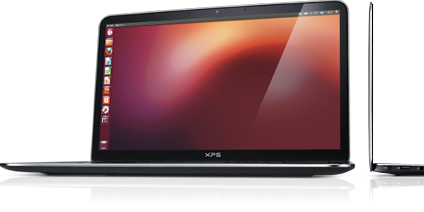
Shuttleworth raves about Dell XPS13 developer edition

May 24, 2013

At the OpenStack summit last month we caught up with Ubuntu and Canonical founder Mark Shuttleworth.

Below is a quick snippet taken from our chat with Mark where he talks about the Dell XPS 13 developer edition aka Project Sputnik.  Mark dubs the system “freakin’ awesome” and the “environment of choice for anyone doing web or cloud development.”  🙂

Extra-credit reading

  • Laptop Week Review: The Dell XPS 13 Developers Edition With Ubuntu – TechCrunch
  •  It just works: Dell XPS 13 Developer Edition Linux Ultrabook review – Ars Technica

Sputnik satellite sited in Portland Oregon

April 26, 2013

Last week, during the OpenStack Summit that was held in Portland, Oregon, a 55 year-old soviet satellite was spotted a various indoor locations.  Rumor has it that the satellite was named after a project at Dell to create a developer client-to-cloud platform.

Sputnik satellite streaks through warehouse where Mirantis/Dell party is held.

Sputnik satellite streaks through warehouse where Mirantis/Dell party is held during OpenStack summit.

Sputnik satellite spotted hovering above Dell booth on the floor at the OpenStack summit.

Sputnik satellite spotted hovering above Dell booth on the expo floor at the OpenStack summit.

Extra-credit reading

Pau for now…


Ars Technica provides detailed review of Dell XPS 13 developer edition

April 22, 2013

If you’re thinking about getting a Dell XPS 13 developer edition you might want to check out the comprehensive review published by Ars Technica this weekend:

It just works: Dell XPS 13 Developer Edition Linux Ultrabook review — Dell’s substantial investment in making a functional Linux Ultrabook pays off.”

Here is the summary intro:

In an effort originally known as Project Sputnik, Dell dedicated resources into doing Linux on an Ultrabook “right”—writing code where necessary (and contributing that code back upstream like a good FOSS citizen) and paying attention to the entire user experience rather than merely working on components in a vacuum. The result is a perfectly functional Ultrabook with a few extra tools—that “Developer Edition” moniker isn’t just for show, and Dell has added some devops spices into the mix with this laptop that should quicken any developer’s heartbeat.

Check out the entire review

Extra-credit reading

Pau for now…


Talking about Project Sputnik and the importance of Devs to Dell

January 15, 2013

At Dell World I was interviewed about Project Sputnik, the resulting XPS 13 Developer Edition we launched and the importance of developers.

Here’s the interview (notice my fashion forward blue Dell shirt 😉

Extra-credit reading

Pau for now…


Sputnik has landed! Introducing the Dell XPS 13 Laptop, Developer Edition

November 29, 2012

A little over six months ago we announced a scrappy skunkworks project to pilot a developer solution based on Ubuntu 12.04LTS and our sleek XPS 13 laptop.  Thanks to the amazing feedback and support we have received from the community, today we are announcing the availability of the resulting official product – the Dell XPS 13 laptop, developer edition.

What’s exactly is it?

Here is an overview of the components of this client-to-cloud solution and some key facts:

Hardware: XPS 13 laptop, high-end config

  • I7 CPU, 8GB RAM, 256GB SSD

Software

Price: $1,549 $1,449* (includes 1 yr ProSupport)

*Updated 11/30/12: the community pointed out we had not priced consistently across our online stores, this has been fixed.  This offering was always intended to be priced less than Windows.

Availability

  • Small office/consumer – U.S.
  • Enterprise – U.S./Canada
  • Outside the US  – early 2013

Community projects: Profile tool and Cloud Launcher

The profile tool and cloud launcher are beta open source projects that we have just kicked off on github.  These projects are quite nascent at this point and we are looking for more people to get involved and help get them going (hint, hint 🙂 ) .

  • Profile Tool: The idea behind the profile tool is to provide access to a library of community created profiles on github, such as Ruby and Android, to quickly set up your development environments and tool chains.
  • Cloud launcher: The cloud launcher enables you to create “microclouds” on your laptop, simulating an at-scale environment, and then deploy that environment seamlessly to the cloud.  Today the launcher utilizes Linux Containers to model your environment on your laptop and then uses Juju to jettison that environment to the cloud.  The launcher project on github will allow for community expansion on this concept using different technologies and approaches.

How did we get here?

As I mentioned at the beginning, project Sputnik began as a skunkworks effort.  It was made possible by internal incubation fund designed to bring wacky ideas from around the company to life in order to tap innovation that might be locked up in people’s heads. 

Just weeks after the basic concept was greenlighted by the innovation team, it was publically announced as a pilot project at the Ubuntu developer summit.  The big focus of our efforts, particularly in the beginning, has been to work with Canonical to make sure that we had the appropriate drivers for all functionality including the pesky touchpad.

From the start, the idea was to conduct project Sputnik out in the open, soliciting and leveraging direct input from developers via our Project Sputnik StormSession, comments on this blog, threads on the Sputnik tech center forum as well as the project Sputnik beta program.  In fact it was the tremendous interest in the beta program that convinced us to take Project Sputnik from pilot to product.

I would like to give a special shout out to the beta cosmonauts who signed on.  They were an intrepid lot who were patient and diligent working through issues to help make sure that when we went to production we had a product that developers would want.

Where do we go from here?

The next big thing for XPS 13 developer edition is availability outside the United States.  We are working with teams inside of Dell to make this so as quickly as we can.  The other direction we are looking at potentially expanding is offering a bigger beefier platform for developers.  The XPS 13 is perfect for those who want an ultra light and mobile system but we have heard from a bunch of devs who would also like an offering that was more workstation-like with a bigger screen and more RAM.

Today is a very proud moment for our team, putting together an official Dell offering for developers with their input and suggestions through out the process.  Stay tuned for more to come!

 Pau for now…


OSCON: Project Sputnik Explained + Coverage recap

July 30, 2012

The week before last I had a fantastic time at OSCON, seeing old friends and making new ones.  As always, the hallway track was the one I found most enlightening.

On the second day we announced that project Sputnik would be going from project to product in the fall and got a fantastic response (see some of the articles written about it at the end).  On the day of the announce Mike Hendrickson, O’Reilly’s VP of content strategy, interviewed me about the project (check out Mike’s project Sputnik review).  That video is the first one below.

I also did a “cliffs notes” version with Janet Bartleson which clocked in at one minute and 47 seconds so if you’re short on time you can check out the second one.

Extra-credit reading

  • Slideshow: Linux, Open Source & Ubuntu: OSCON 2012: The Open-Source Creative Engine Drives the Economy – eWeek
  • Dell announces Ubuntu developer laptop – ITWeb
  • Dell Launching Ubuntu Linux Developer Laptop After Successful Pilot Program Dubbed ‘Project Sputnik’ – International Digital Times
  • Dell set to launch their Ubuntu developer laptop, Sputnik, later this year – TweakTown
  • Dell’s Sputnik project is a go – Technoholik
  • Dell expands open source initiatives – ITWeb
  • Linux fans rejoice: Dell XPS 13 will come with Ubuntu – BetaNews
  • Dell Takes Another Crack at Linux Boxes with Project Sputnik, Launching This Fall – HotHardware
  • Dell XPS 13 Ultrabook For Developers Will Launch In 2012 – The Droid Guy
  • Dell launching Sputnik, the Ubuntu developer laptop, this year – Ars Technica
  • Dell to launch Ubuntu-based XPS 13 laptop this fall – Hardware.Info (UK)
  • Open-Source Goes Ultraportable With Dell Pre-Installed Ubuntu XPS 13 Offering – Mobile Magazine
  • Dell to ship XPS 13 with Ubuntu Linux in some areas, Precise Pangolin goes ultraportable – Engadget
  • Dell XPS 13 Ultrabook with Ubuntu Linux Installed Launches This Fall – Geeky Gadgets
  • Linux comes to ultrabooks: Dell to preload OS on XPS 13 – CNET
  • Dell to launch Linux ultrabook in Fall – Fierce CIO
  • 4 Ways Dell Is Becoming An Open Source Company – TechCrunch
  • Shuttleworth talks up Ubuntu 12.10, growing acceptance of Linux on desktop and Ubuntu Unity – ZDNET
  • Dell’s Developer Laptop – i-Programmer
  • Dell announces expansion of three open source initiatives – eChannelLine
  • Dell’s Development Computer, Project Sputnik, Coming this Fall – LAPTOP Magazine
  • Dell Opens Up To Open Source Again – RedOrbit
  • As Windows 8 looms, Dell readies Ubuntu laptop for fall release – ExtremeTech
  • Dell adds to OpenStack and creates cloud notebook – DatacenterDynamics
  • Dell’s Project Sputnik is go for launch – Bit-tech.net
  • Dell Solidifies Commitment to Open Source, Developers at OSCON – eWeek
  • Dell Linux-Based Laptop Goes On Sale This Fall – The Inquisitr
  • Dell Expands OpenStack Cloud Efforts, and Other Open Source Programs – OStatic
  • The Ultrabooks Dell Ubuntu developers arrive later this year – Xataka (Spain)
  • Dell ready to sell laptops with Ubuntu – hwjournal.net (Italy)
  • Dell puts Linux ultrabook – PuntoInformatico (Italy)
  • Dell brings XPS 13 laptop from Ubuntu – Hardware.info (Dutch)
  • Dell’s New Ubuntu Linux Laptop Is Coming This FallPC World
  • A first look at Dell’s “Sputnik” Ubuntu Linux developer laptop – ZDNet
  • A first look at Ubuntu 12.04 (Photo Gallery) – ZDNet
  • Dell Gives Linux Laptops Another Chance – TechCrunch
  • Dell launching Project Sputnik developer laptops in fall – Ubergizmo
  • Dell to release Project Sputnik developer laptop this fall – The Verge
  • Dell to launch Project Sputnik developer laptops this fall – SlashGear
  • Pentaho, Datameer Join Dell’s Project Sputnik – The VAR Guy
  • Dell to offer Ubuntu XPS 13 laptops this Autumn – Inquirer
  • Dell introduced based on OpenStack cloud solutions – Servers.PCOnline (China)
  • Dell’s to sell Ubuntu ultrabooks this fall, Project Sputnik graduates from beta – Liliputing
  • New Ubuntu Laptop, from Dell, to Head for Developers – OStatic
  • Dell confirms Linux laptop and expands OpenStack cloud solutions – V3.co.uk
  • Dell’s Ubuntu Ultrabook arrives this autumn – PC Pro
  • Dell readies Linux Ultrabook for autumn release – Reg Hardware
  • Coming: Dell Ultrabook with Ubuntu 12.04 for Developers – The H
  • Dell Ubuntu Linux Developer Laptop Launches this Fall: Project Sputnik FTW – Mobile & Apps
  • Project Sputnik Versus Microsoft – PC Magazine
  • Dell’s Ubuntu Laptop Program Enters Beta, ‘Blows Away’ Expectations – PC World
  • Dell’s Project Sputnik Set To Build The Ultimate Developer Laptop – Crazy Engineers
  • Dell release a Linux laptop in autumn‎ – TICbeat (Spain)
  • Project Sputnik: The Ubuntu laptop from Dell in approach – Blogeee.net, CNET (France)
  • Project Sputnik: the laptop to cloud developers – Tom’s Hardware (France)
  • Dell puts a foot in the Linux market – Mac Generation (France)
  • Soon an XPS 13 from Dell with Ubuntu 4.12 – Revioo.com (France)
  • Sputnik is concretely: Dell Ultra with Ubuntu Book 12:04 in Autumn – Pro-Linux (Germany)
  • Officially launched the project “Sputnik” notebook PC development to developers only with Dell, the Ubuntu – SourceForge.JP Magazine (Japan)
  • Dell XPS 13 starts this autumn sale with Ubuntu – Tweakers.net (Netherlands)
  • New Linux PC from Dell – Computerworld (Norway)
  • Dell materializes its Linux project – Silicon News (Spain)
  • Dell is preparing a new laptop with GNU / Linux – Somos Libres (Peru)
  • Dell will begin selling computers with Linux preinstalled at the factory – FayerWayer (Spanish)
  • Laptop Dell Launches Special Project Developer Sputnik This September – Chip Online Portal (Indonesia)
  • Dell returns to the market for Linux-Laptop– CyberSecurity (Russia)
  • Dell offers Linux-laptops a second chance – DailyComm (Russia)
  • Dell revives project for Linux laptops – Tech News (Bulgaria)
  • Dell Returned to the Market for Linux Laptops – siteua.org (Russia)
  • 4 Intriguing Desktop Linux Options Coming Soon to Retail Stores – Linux.com

Announcing project Sputnik Beta program

July 2, 2012

Last week project Sputnik got an official presence on dell.com.  While the project is still a skunk works effort rather than a product, we are rapidly gaining traction within the company.

If you’re not familiar with project Sputnik, its a laptop pilot targeted at developers and based on Dell’s XPS13 ultrabook and Ubuntu 12.04LTS.

The new page points you to where you can buy an XPS13 (unfortunately still pre-loaded with Windows at this time), where you can get the image to load, where you can offer suggestions, read about people’s experiences and where you can sign up for a beta unit.

Be a Beta Cosmonaut

If you are interested in getting your hands on a project Sputnik beta unit we are now recruiting volunteers for the Sputnik Beta Cosmonaut program (and yes we know the original Sputnik was unmanned, we’re taking artistic license here).  A limited number of applicants will be selected to receive a discounted, beta version solution (Dell XPS 13 Ultrabook with Ubuntu 12.04LTS pre-loaded).

If selected, all we ask is that you use the system regularly and give us your honest feedback on the project Sputnik forum.  It will be interesting to see if we get five people applying to be cosmonauts or 5,000.  Stay tuned…

To apply, please fill out this form.

Project Sputnik forum and wiki

Along with a landing page on dell.com, we recently launched a project Sputnik presence on Dell TechCenter.  On TechCenter, you can find a Sputnik wiki as well as the forum I mentioned above to share experiences with Sputnik and file bugs.

BTW both Dell and Canonical will be at OSCON and one of the things we’ll be talking up is project Sputnik.  Stop by and say hi if you’re there.

Key links

Pau for now…


Sputnik…Wow!!

May 29, 2012

Courtesy of nasaimages.org

We knew that project Sputnik, the idea of creating a developer laptop based on Dell’s XPS13 ultrabook and Ubuntu 12.04LTS, would have appeal but we never could have anticipated the response we’ve gotten.

To put it into perspective, the most cumulative views I’ve had of a blog entry before Sputnik was 2,700.   My post introducing Sputnik, as of tonight, has had over 42,000 views!  And the news has been carried by a boatload of   pubs and blogs around the world (see a partial list below).

Silent but not sleeping

In case you’re wondering, the radio silence for the last couple of weeks  hasn’t been intentional our little team has just been crazy busy.   Not only have we gotten attention outside of Dell but our profile has raised quite a bit inside as well.  Our skunk works team has been scrambling to leverage that attention to see what we can do to put this on a faster track.  We have also had a bunch of meetings with Canonical to talk about the best way forward given the intense interest.

Whole lot of feedback

We have been deluged with comments and suggestions both on my blog and the Sputnik Storm session and while there were plenty of people who said they would  buy it now if it was available, we also received some clear direction on where people would like to see this offering go.   Some of the key areas for improving the offering are:

  • Multi gesture support for the touch pad  (more on that in a second)
  • Screen resolution
  • More memory (8GB+)
  • Matte screen
  • Pricing: don’t make it more expensive than Windows

We are making note of these suggestions as we plot our way through this six month pilot.

The track pad

Its no surprise that the number one complaint has been the lack of multi gesture support in the touchpad.  Canonical and Dell have reached out to the vendor and last week they began working on an open source driver.  The vendor is sending both Dell and Canonical intermediary versions which will allow us to iterate on them as they’re developing and provide feedback about what’s working and what isn’t with the way things are assembled.  Fingers crossed, we hope to see the completed driver by the end of June.

Update June 21: the driver for the touchpad is now available!

Thanks everyone for their amazing interest Sputnik and look for a bunch more info soon.

Extra-credit reading — some Sputnik coverage


Redmonk on Developers and Project Sputnik

May 8, 2012

Today at the Ubuntu Cloud Summit here in Oakland I grabbed sometime with Redmonk analyst Stephen O’Grady.  It was Stephen who originally brought up the idea of creating a Dell laptop running Ubuntu targeted at developers.

I talked to Stephen about how he would characterize today’s world of developers and what he feels project Sputnik needs to deliver on to be successful.

Updated March 22

Extra-credit reading

Pau for now…


Talking about Project Sputnik

May 8, 2012

Last Friday Cote and I took a break from the mad rush getting ready for today’s Sputnik announce and grabbed a conference room to record a short video.  Below we discuss the project, how it came about, what its goals are and where it could go from here.

-> Weigh in on Dell IdeaStorm: Project Sputnik

Extra-credit reading


Introducing Project Sputnik: Developer laptop

May 7, 2012

-> Update 2/18/2013: Sputnik 2 is here: Dell XPS 13 Developer Edition goes 1080p and lands in Europe

-> Update 11/29/2012: Sputnik has landed! Introducing the Dell XPS 13 Laptop, Developer Edition

Today I am very excited, I finally get to talk about project Sputnik!  In a nutshell, drumroll please, here it is:
Made possible by an internal innovation fund, project Sputnik is a 6 month effort to explore the possibility of creating an open source laptop targeted directly at developers.  It is based on Ubuntu 12.04 and Dell’s XPS13 laptop.

To put it in context, Sputnik is part of an effort by Dell to better understand and serve the needs of developers in Web companies.  We want to finds ways to make the developer experience as powerful and simple as possible.  And what better way to do that than beginning with a laptop that is both highly mobile and extremely stylish, running the 12.04 LTS release of Ubuntu Linux.

Why a developer laptop

When we first started setting up the web vertical to focus on companies who use the internet as their platform, we brought in Stephen O’Grady of Redmonk to learn as much as we could about the needs of developers.  One of the ideas that Stephen tossed out was a Dell laptop running Ubuntu, targeting developers.  We thought the idea was pretty cool and filed it away.

As we continued talking to customers and developers the topic of Ubuntu kept coming up and we came across a fair number of devs who were asking for a Dell laptop specifically based on it.  To my knowledge, no other OEM has yet made a system specifically targeted at devs and figured it was time to see what that might mean.  When the XPS13 launched we realized that we found the perfect platform to start with and when Dell’s incubation program was announced we knew I had the vehicle to get the effort kick started.

I should also add that Ubuntu was a natural choice not only because of its popularity in the Web world but Dell has quite a bit of experience with it.  In fact Dell has enabled and pre-installed out-of-the-factory Ubuntu on more computer models than any other OEM.

What’s Sputnik actually running?

The install image available for Sputnik contains

  1. drivers/patches for Hardware enablement
  2. a basic offering of key tools and utilities (see the complete list at the end of this entry)
  3. coming soon, a software management tool to go out to a github repository to pull down various developer profiles.

Hardware enablement

In putting together the project, the area that we focused on first was hardware enablement.  As Linux users are all too painfully aware, Linux drivers are not always available for various platforms.  We have been working hand in hand with Canonical, the commercial sponsor behind Ubuntu and identified three main areas on the XPS13:

  1. An issue with brightness
  2. The Wifi hotkey
  3. The touchpad and multi touch support

The first two have been resolved but the last one re the touchpad is still at large.  The issue is a bit of a pain particularly the lack of palm rejection support which can cause your cursor to jump by mistake.  We have contacted the vendor who makes the touchpad and they are sizing the effort to fix this and at the same time we are working with Canonical to find an interim solution.

Update June 21: the driver for the touchpad is now available!

Developer profile management

Hardware enablement is table stakes but where Sputnik starts to get interesting is when we talk about profiles.  No two developers are alike so instead of stuffing the system with every possible tool or app a developer could possibly want, we are trying a different approach.  As mentioned above, the actual “stuff” on the install image is pretty basic, instead we are working with a few developers to put together a tool that can go out to a github repository and pull down various developer profiles.  The first profiles we are targeting are Android, Ruby and JavaScript.

As a one of our alpha cosmonauts, Charles Lowell, explained (we have been working with three local developers in Austin, Charles, Mike Pav and Dustin Kirkland to put together our initial offering together.   And yes I know Sputnik was unmanned but its our project and we wanted to call the testers “cosmonauts.” )

What I’d like to see is not only a gold-standard configuration, but also a meta-system to manage your developer configuration… The devops revolution is about configuration as code. How cool would it be if my laptop configuration were code that I could store in a source repo somewhere?

After we build the management tool and some basic profiles to get the effort started, we are hoping that the community will take over and began creating profiles of their own.

Getting Feedback and UDS activities

The idea is to conduct project Sputnik out in the open.  There is a Storm Session that went live this morning on Dell Idea Storm for people to discuss the project and submit feedback, comments and ideas.  Later today here at the Ubuntu Developer Summit, Dustin, Mario Limonciello of Dell and I will be hosting a UDS session to discuss Sputnik.  Additionally at UDS there is a coding contest that has been kicked off.  The three people who write the best Juju charms will each get an XPS13.

The Vision: a Launchpad to the cloud

As mentioned at the start, Sputnik is currently a 6month project to investigate an Ubuntu laptop.  If successful, we have big plans for the effort. 🙂

When we initially pitched Sputnik to Ubuntu’s founder Mark Shuttleworth a couple months ago he really liked the idea.  In his eyes however, he saw something bigger.  Where it got really interesting for him was when this laptop was optimized for DevOps.  In this scenario we would have a common set of tools from client, to test, to production, thereby tying Sputnik via a common tool chain to a cloud backend powered by OpenStack.  Developers could create “micro clouds” locally and then push them to the cloud writ large.

We see a lot of potential in Sputnik to provide developers with a simple and powerful tool.  Only time will tell however so stay tuned to this blog, check out the Sputnik Storm session and weigh in on the project, what you’d like to see and how you think it can be made better.

Pau for now…

Extra-credit reading

Links and notes

Basic Install

== standard meta packages ==

ubuntu-desktop^

standard^

== scm ==

git

git-core

bzr

bzr-gtk

bzr-git

python-launchpadlib

== utilities ==

screen

byobu

tmux

meld

juju

charm-tools

charm-helper-sh

euca2ools

puppet

chef (available post install)

== editors ==

emacs

vim

vim-gnome

== browsers ==

chromium-browser

firefox

== common build tools/utilities & dependencies ==

fakeroot

build-essential

crash

kexec-tools

kvm

makedumpfile

kernel-wedge

fwts

devscripts

libncurses5

libncurses5-dev

libelf-dev

asciidoc

binutils-dev


DevOpsDays: Crowbar, where its been and where its going

April 25, 2012

Earlier this month at DevOpsDays here in Austin the Dell Crowbar crew hosted a session and gave a demo.  If you’re not familiar with it, Crowbar is an open source software framework written at Dell.  I grabbed some time with Crowbar architect Rob Hirschfeld and got him to recap how far we’ve come in its less than a year and where he sees us going over the next year.

Extra-credit reading


EnterpriseDB’s new Postgres cloud database

March 27, 2012

A little while ago, EnterpriseDBs VP of Biz Dev, Sean Doherty popped in for a visit.  While he was here I got him to tell me what EnterpriseDB, the certified professional distribution of the PostgreSQL open source DB, has been up to and fill me in on their new cloud database.

Some of the ground Sean covers:

  • What is EnterpriseDB and what is their business model
  • 1:10 Where does EnterpriseDB fit in the overall database landscape and where is it used
  • 2:00 The release of the Postgres Plus cloud database on EC2 and soon OpenStack
  • 2:44 What EnterpriseDB has got up its sleeve in the way of features and functionality in the next year

Extra-credit reading

Pau for now…


Dell Officially Launches Web|Tech vertical — the 100 second overview

February 29, 2012

Last month I mentioned that Dell was launching a Web|Tech vertical targeted at those companies who use the internet as their primary platform.  Well, a couple of weeks ago at our annual sales kick off (FRS) we debuted our six new commercial verticals to our sales teams from around the world.

At the show, which was held in Vegas, we had booths on the expo floor to talk about our solutions.  We also delivered breakout sessions to present an overview of customer needs and concerns for each of the six — Retail, Manufacturing, Financial Services, Web|Tech, Energy and TME (Telco, Media & Entertainment), as well as for our existing three verticals in the Public space, Government, Education and Healthcare.

Here is a quick overview I did of the Web|Tech vertical from the show floor in a mocked up developer’s cube in our booth.

Extra-credit reading

Pau for now…


The World of Web and Developers, getting to know it better

January 16, 2012

A couple years back, on the Public side of the house, Dell set up specific marketing teams  to focus on customer needs in three areas: Healthcare, Government and Education.  This vertical approach turned out to be a great way to get to better know our customers and their pain points and ultimately meet their needs.

Based on this success, a little while ago we kicked off a similar effort in our commercial business.  The first six verticals we are setting up are: Retail, Manufacturing, Financial Services, Web|Tech, Energy and TME (Telco, Media & Entertainment).  Web|Tech is the group I belong to (I lead marketing for the group).

Developers, Developers, Developers

In the Internet space we have already had a fair amount of success through our DCS group.  The idea with the new Web vertical is to learn even more about the customer set, companies that use the internet as their platform, and take this knowledge along with our accumulated experience, to a wider audience.  Two of the key areas of focus of this new vertical will be developers and open source software.

Look it up

One of the ways we are helping our teams get a better understand of the wild and wacky world of the Web and Web developers is via a glossary we’ve created.  In compiling this I pulled information from various and sundry sources across the Web including wikipedia, community and company web sites and the brain of Cote.

The glossary is organized into the following sections:

[Update Feb 1: I’ve gone back and linked the entries below]

Over the next several entries I will be posting the glossary.  Feel free to bookmark it, delete it, offer corrections, comments or additions.

Extra-credit reading

Pau for now…


Mark Shuttleworth part two: Developers, DevOps & the Cloud

January 13, 2012

As I mentioned in my last entry, Mark Shuttleworth of Ubuntu fame stopped by Dell this morning on his way back from CES.  Between meetings Mark and I did a couple of quick videos.  Here is the second of the two.  Whereas the first focused on the client, this one focuses on the Cloud and the back-end.

Some of the ground Mark covers

  • The cloud, Ubuntu and OpenStack involvement
  • The developer story: connecting the dots between app work on the client and testing and then deployment on the other end.
  • The world of DevOps and how JuJu fits in
  • Apple’s iOS as a developer platform and where Linux might have the edge going forward

Extra-credit reading


Hadoop World: What Dell is up to with Big Data, Open Source and Developers

December 18, 2011

Besides interviewing a bunch of people at Hadoop World, I also got a chance to sit on the other side of the camera.  On the first day of the conference I got a slot on SiliconANGLE’s the Cube and was interviewed by Dave Vellante, co-founder of Wikibon and John Furrier, founder of SiliconANGLE.

-> Check out the video here.

Some of the ground we cover

  • How Dell got into the cloud/scale-out arena and how that lead us to Big Data
  • (2:08) The details behind the Dell|Cloudera solution for Apache Hadoop and our “secret sauce,” project crowbar.
  • (4:00) Dell’s involvement in and affinity for open source software
  • (5:31) Dell’s interest in and strategy around courting developers
  • (7:35) Dell’s strategy of Make, Partner or Buy in the cloud space
  • (11:10) How real is OpenStack and how is it evolving.

Extra-credit reading

Pau for now…


Hadoop World: Talking to Splunk’s Co-founder

December 4, 2011

Last but not least in the 10 interviews I conducted while at Hadoop World is my talk with Splunk‘s CTO and co-founder Erik Swan.  If you’re not familiar with Splunk think of it as a search engine for machine data, allowing you to monitor and analyze what goes on in your systems.  To learn more, listen to what Erik has to say:

Some of the ground Erik covers:

  • What is Splunk and what do they do?
  • (1:43)  The announcement they made at Hadoop world about integrating with Hadoop and what that means.
  • (4:25) How Erik and Rob Das got the the idea to get involved in the wacky world of machine data and to create Splunk.

Extra-credit reading

Pau for now…


How to create a Basic or Advanced Crowbar build for Hadoop

November 29, 2011

As I mentioned in my previous entry, the code for the Hadoop barclamps is now available at our github repo.

To help you through the process, Crowbar lead architect Rob Hirschfeld has put together the two videos below.  The first, Crowbar Build (on cloud server), shows you how to use a cloud server to create a Crowbar ISO using the standard build process.  The second,  Advanced Crowbar Build (local) shows how to build a Crowbar v1.2 ISO using advanced techniques on a local desktop using a virtual machine.

Crowbar Build (on cloud server)

Advanced Crowbar Build (local)

Pau for now…


Open source Crowbar code now available for Hadoop

November 29, 2011

Earlier this month we announced that Dell would be open sourcing the Crowbar “barclamps” for Hadoop.  Well today is the day and the code is now available at our github repo.

Whats a Crowbar barclamp?

If you haven’t heard of project Crowbar it’s a software framework developed at Dell that started out as an installation tool for OpenStack.  As the project grew beyond installation to include monitoring capabilities, network discovery, performance data gathering etc., the developers behind it, Rob Hirschfeld and Greg Althaus, decided to rewrite it to allow modules to plug into the basic Crowbar functionality.  These modules or “barclamps” allow the framework to be used by a variety of projects.  Besides the OpenStack and Hadoop barclamps written by Dell, VMware created a Cloud Foundry barclamp and DreamHost created a Ceph barclamp.

To help you get your bearings

As I mentioned in the opening  paragraph, the code for the Hadoop barclamp is now available.  To help you get started, below are a couple of videos that Rob put together.  The first walks you through how to install Crowbar and the second one explains how to use Crowbar to deploy Hadoop.

Extra-credit reading

Pau for  now…