Dell announces availability of OpenStack solution; Open sources “Crowbar” software framework

July 26, 2011

Today at OSCON we are announcing the availability of the Dell OpenStack Cloud Solution along with the open sourcing of the code behind our Crowbar software framework.

The Solution

Dell has been a part of the OpenStack community since day one a little over a year ago and today’s news represents the first available cloud solution based on the OpenStack platform.  This Infrastructure-as-a-service solution includes a reference architecture based on Dell PowerEdge C servers, OpenStack open source software, the Dell-developed Crowbar software and services from Dell and Rackspace Cloud Builders.

Crowbar, keeping things short and sweet

Bringing up a cloud can be no mean feat, as a result a couple of our guys began working on a software framework that could be used to quickly (typically before coffee break!) bring up a multi-node OpenStack cloud on bare metal.   That framework became Crowbar.  What Crowbar does is manage the OpenStack deployment from the initial server boot to the configuration of the primary OpenStack components, allowing users to complete bare metal deployment of multi-node OpenStack clouds in a matter of hours (or even minutes) instead of days.

Once the initial deployment is complete, Crowbar can be used to maintain, expand, and architect the complete solution, including BIOS configuration, network discovery, status monitoring, performance data gathering, and alerting.

Code to the Community

As mentioned above, today Dell has released Crowbar to the community as open source code (you can get access to it the project’s GitHub site).  The idea is allow  users to build functionality to address their specific system needs.  Additionally we are working with the community to submit Crowbar as a core project in the OpenStack initiative.

Included in the Crowbar code contribution is the barclamp list, UI and remote API’s, automated testing scripts, build scripts, switch discovery, open source Chef server.  We are currently working with our legal team to determine how to release the BIOS and RAID which leverage third party components.  In the meantime since it is free (as in beer) software, although Dell cannot distribute it, users can directly go the vendors and download the components for free to get that functionality.

More Crowbar detail

For those who want some more detail, here are some bullets I’ve grabbed from Rob “Mr. Crowbar” Hirschfeld’s blog:

Important notes:

  • Crowbar uses Chef as it’s database and relies on cookbooks for node deployments
  • Crowbar has a modular architecture so individual components can be removed, extended, and added. These components are known individually as “barclamps.”
  • Each barclamp has it’s own Chef configuration, UI subcomponent, deployment configuration, and documentation.

On the roadmap:

  • Hadoop support
  • Additional operating system support
  • Barclamp version repository
  • Network configuration
  • We’d like suggestions!  Please comment on Rob’s blog!

Extra-credit reading

Pau for now…


Sun’s Chief Open Source Officer’s new Gig

August 27, 2010

Last but not least in my series of interviews from last month’s Cloud Summit at OSCON I present to you my conversation with Simon Phipps.  Simon, who until earlier this year was the chief Open Source officer at Sun Microsystems, recently joined the start-up ForgeRock as their chief strategy officer.  Here is what Simon says:

Some of the topics Simon tackles:

  • ForgeRock offers access management and authentication software based on open source code that was developed at Sun.
  • Since the software is open source you can download it for free at ForgeRock.
  • ForgeRock makes its money by selling subscriptions that provide various grades of SLAs.
  • Even though they are 4 mos old, they already have 20 customers including the world’s largest gambling exchange.

Extra credit reading:

Pau for now…


Chief Scientist at BT: “In nature there are no SLAs”

August 16, 2010

J.P. Rangaswamy is British Telecom’s chief scientist and a very interesting fellow.  At the Cloud Summit at OSCON last month he delivered a talk on the future of the cloud.  I was quite intrigued so I grabbed him during the break to learn a bit more about a few of the concepts he presented.

Some of the topics that J.P. tackles:

  • Many of the best utilities we’ve built: Internet, Web, wireless environment etc are built on fundamentally frail best-effort infrastructures.
  • In order to gain predictability you sacrifice a lot of the original value eg. QWERTY
  • He’s not against SLAs, J.P.’s against the throwing away of value under the guise of false beliefs in SLAs.
  • What is the key area in the cloud that needs to be shored up? Interoperability.  Security is overplayed, just look at the development of the Web.
  • Need to concentrate on federation as a mind set — the ability to create services that are daisy chaining select pieces from a variety of each, vs integrated vertical stacks.
  • He’s worried about SLAs because the things people are doing to stop SLAs from being light weight are actually things that prevent interoperability.

Pau for now…


Ubuntu, the Cloud and the Future — Neil Levine

July 27, 2010

After the cloud summit last week at OSCON, I sat down with Neil Levine of Canonical to see what was in store for Ubuntu cloud-wise (Canonical is a partner of ours in our cloud ISV program).  Neil is the VP of Canonical’s corporate services division which handles their cloud and server products.

Here’s what Neil had to say:

Some of the topics Neil tackles:

  • The next Ubuntu release “Maverick Meerkat” and its geek-a-licious launch date: 10.10.10.
  • Look for Maverick to make Eucalyptus even easier to deploy and use.
  • Data processing and data analytics is one of the key use cases in the cloud and Canonical is looking to move up the stack and provide deep integration for other apps like Hadoop and NoSQL.
  • What are some of the areas of focus for next year’s two releases i.e. 11.04 and 11.10.
  • Project ensemble: what it is and what its goals are.

Extra-credit reading

Pau for now…


My quick spiel on the cloud

July 25, 2010

At OSCON last week I ran into a compadre from a previous life, Fred Kohout.  Fred is now the CMO at UC4, a pure play software automation company, and he, like I, was in Portland to attend OSCON and the Cloud Summit.

At the summit Fred did to me what I’ve done to so many others, he got me on the receiving end of a video camera to talk about where Dell plays in the cloud and how we see the cloud evolving.

You can check out Fred’s blog from the Summit where he posted my video as well as the interview he did with another former compadre, Peder Ulander, CMO at cloud.com.

Don’t touch that dial

If you’re interested in OSCON be sure to stay tuned.  I’ve got four more interviews from the event that I will be posting soon.

Pau for now…


The OpenStack design summit in review

July 22, 2010

Tuesday after the OSCON cloud summit I sat down with Rick Clark over a well deserved beer.  Rick is the chief architect and project lead for the OpenStack compute project that was announced on Monday.

Last week I interviewed Rick on the first day of the inaugural OpenStack design summit and I wanted to catch up with him and get his thoughts on how it had gone.  This is what he had to say:

Some of the topics Rick tackles:

  • How it went engaging a very large technical group (100+) in an open design discussion patterned after an Ubuntu Developer Summit.
  • Some of the decisions he thought would be no brainers, turned out differently e.g. OVF (open virtualization format) and keeping the storage and compute groups separated.
  • Since the summit involved representatives from over 20 companies, some of them competitors, how good were people at putting away their business biases/agendas?
  • How far they got (hint they got requirements from everyone for the first release).
  • They’ve already gotten their first code contributions.
  • How they plan to build a community: actively looking to hire a community manager.   In the meantime its actively growing and in a week they’ve gone from 10 people in the IRC channel to 150 on Tuesday.

Extra-credit reading:

But wait there’s more…

I got back from OSCON last night with a fist full of videos.  In addition to the above, coming soon to a browser near you are the following interviews:

  • Brett Piatt with more OpenStack goodness
  • J.P. Rangaswami, Chief Scientist at BT — Nature doesn’t require SLAs
  • Simon Phipps about his new company ForgeRock
  • Neil Levine, VP at Canonical about what’s in store for Ubuntu.

Pau for now…


Talkin’ to the project lead of OpenStack Object Storage

July 18, 2010

The first code that is available from the OpenStack project, and its available today, is the code for the storage effort, “Object Storage.”  The man at the technical helm of this effort is Will Reese of Rackspace.  Will’s daytime job is development manager and system architect for Rackspace’s Cloud Files, the source of the code for Object Storage.  Will and I grabbed some time at last week’s design summit and he briefed me on the project:

Some of the topics Will tackles:

  • Object Storage is based on the open sourced code from Rackspace’s Cloud Files.
  • What attracted NASA to Cloud Files (think scale).
  • Rackspace will lead the project to get the community kick started but is looking for the community to take over.
  • Storage and Compute will each have their own tech boards made up of members from Rackspace, NASA and the community.
  • In the second half of the interview Will takes us through a quick overview of the cloud files architecture which is written in python, leverages eventlib, and borrows concepts from memcache and some  key-value stores –>  To learn more, check out Will’s talk at OSCON this Wednesday.

Extra-credit reading

Pau for now…


How to Community

July 7, 2009

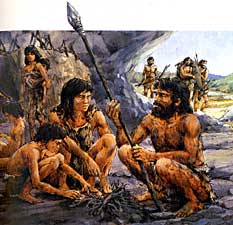
Obligatory cheesy cavemen community illustration.

Obligatory cheesy cavemen community illustration.

The concept of community is one that has been around for quite a while (see image at left).

Originally at least partially defined as a group that shared a common physical location, this term over the last decade, with the help of the Internet, has vastly expanded to include virtual communities.  (Obviously other media before the Net like radio, TV, snail mail and smoke signals have helped to knit together physically separated individuals, however the Net has simply done it on a much larger and more immediate scale).

Powering Software and Presidents

As for its power, it was the Community that became the central driver behind a “new” model of Software creation, Free and Open Source Software.  No longer was code solely written by a group of engineers holed up in a room and fed pizza by sliding it under the door.  It was written collaboratively by a community of mostly volunteers located around the world.  And in a very different arena,  it was the power of community that recently helped propel our current President to the White House.

Now with tools like Twitter and Facebook new communities are being created by the minute and companies and causes all want to know how to harness and leverage the power of community.  Marketing guru Seth Godin has even jumped on the bandwagon with his book “Tribes” an inspiring but content lite work discussing how ideas, people and leaders can be brought together to accomplish big things.

“I’m in charge here” doesn’t work for a Community

Although it may be obvious to some, the most important thing to know about a community is that its about influence and not control.  You can’t direct a community to do anything.  What you can do is provide great products, ideas etc that your community can get behind, promote and help make better.  Its about acknowledging their help and providing the tools and resources to help them help you.  As Max Spevack, the former Community Manager for Fedora Linux once told me, “It’s about the power of persuasion and ‘thank you.’”  Or as the motto of Obama’s field campaign states: “Respect. Empower. Include.”  [Note: this paragraph is recycled from a previous entry]

Learn How to Community

If you want to learn more from the folks actually doing it you may want to check out The Community Leadership Seminar that is being held on July 18-19  in San Jose, CA.   The event is the brainchild of Ubuntu Community manager Jono Bacon and is supported by O’Reilly events.  As the website says

The event pulls together the leading minds in community management, relations and online collaboration to discuss, debate and continue to refine the art of building an effective and capable community.

In true community fashion the majority of sessions will be an unconference format where the topics for discussion will be decided on the day and will be characterized by discussions as opposed to lectures.

And the cost — FREE.  So if you’re heading out to OSCON, which runs from July 20 to 24th, you may want to come out a couple days early.  Or you may just want to attend the event.  Its got an amazing list of attendees already signed up.

Pau for now…