Yesterday, the announcement went out that the Dell | Canonical Enterprise Cloud, Standard Edition was out and ready for consumption. What this cloud-in-a-box allows folks to do is to set-up affordable Infrastructure-as-a-Service (Iaas)-style private clouds in their computer labs or data centers. The cool thing is that, because the Ubuntu Enterprise Cloud (UEC) software is compatible with Amazon Web Services EC2 and S3 services, it enables IT admins and developers to move workloads between public and private clouds.
Who cares?
Application developers and IT service providers and admins who are setting up cloud POC’s are perfect candidates for this pre-configured testing and development environment. With regards to industries, areas where there is a lot of software development work like Hosters, Telco & Communications, Media & Entertainment and Web 2.0 businesses are prime markets for the Dell UEC solution.
So what’s in it?
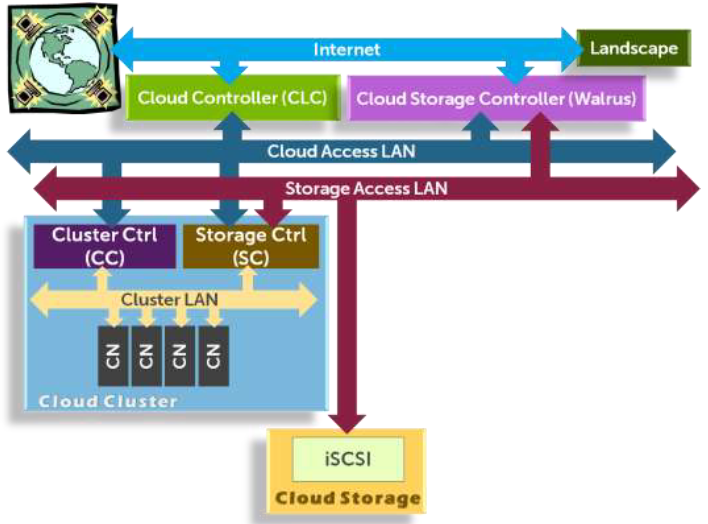
The solutions’ basic components are Dell PowerEdge C systems plus a Dell-specific download of the Ubuntu Enterprise Cloud (made up of the Ubuntu operating system and the Eucalyptus platform for private cloud computing). To simplify getting the whole shebang up and running Dell and Canonical are providing the following:
Walrus Controller – the cloud’s storage repository
Cluster Controller (CC) – the controller for a up to 1024 compute cores grouped together as a cluster
Storage Controller (SC) – the controller for cluster’s storage repository
Compute Node (CN) – cloud’s compute node
And on the support side…
If you’re looking for systems management and support services with your order, you are in luck. Canonical, the company behind Ubuntu, has put together UEC Assist, a support service built specifically for Dell customers deploying SE Edition and which is delivered by Canonical’s Global Services and Support team.
Its all about efficiency
From a Dell DCS (the group at Dell behind this) point of view, this offering fits in well with our strategy of bringing total solutions to market that optimize efficiency at every layer, from code to servers to storage. The open source Dell UEC solution is tailor made to deliver a ready to go IaaS solution.
Every year at the end of January Dell holds a giant kick-off meeting for our enterprise and public sales forces. The event, which has been held in Las Vegas the last two years, is a four-day happening consisting of keynotes, sessions and a full-scale expo where the sales team can touch and learn first-hand about the latest and greatest in Dell solutions and offerings.
Setting up the DCS Modular Data Center on the expo floor
This year the systems and solutions have been out in the market for a little while and we were able to share actual case studies with the attendees showing how our systems and solutions have been able to solve real customer problems. The big new addition to the DCS line up was our Modular Data Center (MDC) which, until just a few months ago, was reserved only for a very small group of select customers.
Gearing up for day two of both duty at the DCS booth.
As you can tell from the picture above, the MDC took up a big part of our booth. It served to house our PowerEdgeC servers and host a selection of our cloud solutions:
Additionally, to provide a peak at what PowerEdge C systems we have up our sleeve, we had several units in an uber secret whisper suite.
Our overall message at the booth was that although these components can be used individually, if you want to run “the world’s most efficient hyperscale data center” you’ll want to combine these optimized solutions and systems with the MDC into one hyper-efficient, integrated system.
Well received
Now as a member of the DCS team I may be a little biased but I really think we had the coolest booth there 🙂 It was great to hear comments from the sales force such as “this is awesome!” and “why didn’t I know about this?!”
We’ll have to start now to figure how we will top this next year.
A group of “stackers” (Rackspace employees involved in OpenStack) paid us a visit today here at Dell. During a break in the meetings I got some time with Mark Collier, VP of Marketing and Business development at Rackspace who has been focused on building up OpenStack. I chatted with Mark about what’s been going on in this open source cloud project and what’s coming up. Take a listen:
Some of the ground Mark covers
What his involvement in OpenStack has been over the last year.
[0:58] What Rackspace is doing to preserve the openness of the community and how they use the “blueprint” process.
[2:32] What brought Mark and his colleagues to Dell
[4:06] What’s coming up in the project’s next release “Bexar,” which is due next Thursday (Feb 3) e.g. IPv6 support provided by NTT engineers and “Glance” an image registry service similar to Amazon’s AMIs. The key message is, with this release OpenStack is ready to deploy.
OpenStack meet-up in Santa Clara on Feb 3, where Dell software architect Rob Hirschfeld will be talking about our experience/learnings deploying OpenStack in our lab.
Earlier this month an interview I did with Robert Duffner, Director of Product management for Windows Azure, went live on the Windows Azure team blog. Robert asked me a variety of questions about Cloud security, how I see the Cloud evolving, the pitfalls of the cloud, where Dell plays etc.
I was pleasantly surprised to see that my ramblings actually turned out coherent 🙂 Here is a section from the interview (you can check out the whole piece here):
Cloud computing is a very exciting place to be right now, whether you’re a customer, an IT organization, or a vendor. As I mentioned before, we are in the very days of this technology, and we’re going to see a lot happening going forward.
In much the same way that we really focused on distinctions between Internet, intranet, and extranet in the early days of those technologies, there is perhaps an artificial level of distinction between virtualization, private cloud, and public cloud. As we move forward, these differences are going to melt away, to a large extent.
That doesn’t mean that we’re not going to still have private cloud or public cloud, but we will think of them as less distinct from one another. It’s similar to the way that today, we keep certain things inside our firewalls on the Internet, but we don’t make a huge deal of it or regard those resources inside or outside as being all that distinct from each other.
I think that in general, as the principles of cloud grab hold, the whole concept of cloud computing as a separate and distinct entity is going to go away, and it will just become computing as we know it.
Dell’s Data Center Solutions (DCS) group focuses on customers operating huge scaled out environments. Given the number of systems deployed in these environments we are always looking for ways to take energy out of our systems. A half a watt here, a half a watt there means big energy savings when multiplied across a hyper scale environment and translates into lower costs to our environment and to our customers’ operating budgets.
Recently we have adopted Samsung’s low voltage DIMMs (“Green DDR3”) in our efforts to drive efficiencies. Take a listen to DCS’s Executive Director of engineering and architecture, Reuben Martinez, in the video below as he walks you through how a seemingly small decrease in DIMM voltage can translate to millions of dollars of savings in hyper scale environments.
Some of the ground Reuben covers:
How much energy US data centers consume and how this has grown.
What is happening to the cost of energy (hint: its going up:).
How our PowerEdge C6105 is designed for power efficiency including utilizing Samsung’s low-voltage memory. (BTW, Samsumg’s Green DDR3’s are also available in our C1100, C2100 and C6100)
The amount of power consumed by memory compared to the CPU (you may be surprised)
[2:35] The TCO calculation that shows the savings that low voltage DIMMs can provide in a typical data center environment.
Mark Shuttleworth, the ever gracious founder of Ubuntu, stopped by Dell this morning to talk to various folks about various subjects. I was able to grab some time with him between meetings and get his thoughts on a few topics.
I was particularly interested in getting his thoughts on Ubuntu Enterprise Cloud (UEC) which will be available this week from Dell as the Dell | Canonical UEC Solution (along with the UEC software, the solution is based on our PowerEdge C2100 and C6100 and comes with a reference architecture and deployment guide). The other topic I wanted to get his insight into was OpenStack.
Here’s what Mark had to say:
What Mark talked about
How Mark has settled into his role as non-CEO (he is still chairman).
What he is focusing on these days: the cloud and product design e.g. Unity.
[1:45] The thinking behind UEC and the combined Dell Canonical offering.
[3:45] OpenStack and Canonical’s participation
Working with both OpenStack and Eucalyptus and how both of these are central to the process of standardization that we are starting to see at the infrastructure layer of cloud computing.
In Data Center Knowledge last week there was a short article, accompanied by a set of photos, that gave view into Microsoft’s very cool new “Cloud Farm” data center. The design of the data center, which is located in Quincy Washington, was driven by Microsoft’s use of some ultra-cool modular data centers 🙂 . It was the modular nature of these units that helped Microsoft finish their initial deployment at their new facility in only eight months.
One of the modular data centers at Microsoft's Cloud Farm. Dang, those are good looking units. (Photo source: Data Center Knowledge)
One of the best sessions I went to at the Gartner Data Center conference last week, was entitled Extreme Data Centers – Attaining Massive scalability – in the minimum space at the lowest cost.
The talk was given by David Cappuccio who is a managing vice president and chief of research for the Infrastructure teams with Gartner, responsible for research in data center futures, servers, power/cooling, green IT, enterprise management and IT operations.
Dell's Modular Data center, mentioned in David's talk, a few days before it went live at Tier 5 in Australia.
Here are my notes from the talk:
The Extreme Data Center definition
Designed for efficiency first
Designed for optimal performance per kilowatt and or per square foot
They leverage new design principles to attain the biggest benefit
An example he then gave was supporting 2,107 servers, 18,300 images and 19 petabytes of storage in 2,600 sq. feet of IT space
New data centers are designed around efficiency
In power utilization
In space allocation
In capital expenditures
Three ways to solve your problem
Build your own datacenter from the ground up — greatest control but most expensive
Retrofit what you have to extend its life – greatest potential risk but least expensive
Use modular ideas to build and expand later
Reduce capital upfront costs
Simple growth when needed
Can use existing land or building
Emerging Design trends
Build small, build often
Build for density
Scale vertically and then horizontally
Build and rebuild pods (or sections of your data center)
Build density zones (group your systems by how dense they are – high, medium or low– and then match the power and cooling at the zone level. Density is usually based on the workload mix)
Consider multi tiered designs (all apps aren’t created equal)
Use free air and reuse heat
Design for the unknown
Modular Designs for sustained growth/The evolution of pre-built solutions
David felt this approach was a really good idea and made sense
He felt the drawback was that there weren’t any reference accounts: he mentioned HP at Purdue and “some company down in Australia” (which dear readers is the Dell MDC down at Tier5, pictured above).
As I mentioned in a recent entry, last week I attended the Gartner Data Center conference where I learned a ton. One of the folks I learned a lot from was Dave Ohara who consults in the data center arena. Dave is uber connected in this space and pens the blog, Green (low carbon) Data Center blog. Dave provided a bunch of introductions while I was there and sat down with me to do the following short video on the ecosystem of data center players.
How do you go about building a data center and who are the players in each phase e.g site selection -> architecture/engineering design -> construction…
What are some of the key disruptions coming to this long standing industry e.g. cloud, Google
This afternoon, Michael Dell himself came to open Dell’s brand new Social Media Listening Command Center. Customers, press and a bunch of us involved in social media at Dell were invited to attend.
To get a good feel for today’s event check out this quick montage of the goings on, including Michael’s remarks and the cutting of the virtual ribbon (FYI on either side of Michael are Dell’s CMO Karen Quintos and VP of Social media, Manish Mehta).
What’s the big idea
Taking a step back, there are three main reasons for a business to leverage social media (the following is based on a conversation I had with the VAR guy who in turn wrote my ramblings up into something coherent):
Monitor & Respond: You need to protect your brand. By monitoring FaceBook, LinkedIn, Twitter and blogs (through Google Alerts), you can defend your brand, answer questions and stop misinformation about your company before it goes viral across the web.
Educate and Inform: This is where you take the time to tell customers more about your services, expertise or unique selling proposition. Generally speaking, this involves speaking to established customers or speaking to customers who have needs for your services.
Establish Thought Leadership: This is how you pull new people into the sales funnel. Perhaps a local business owner didn’t realize (A) they had a pain point and (B) you have the skills to solve that pain point. Through pro-active communications, you’re able to describe your expertise and create sales opportunities that otherwise may not have materialized.
While Dell participates in all three of the buckets above, the command center is primarliy focused on bucket 1.
Monitoring and Responding
As reported today in Mashable, “The center will track on average more than 22,000 daily topic posts related to Dell, as well as mentions of Dell on Twitter. The information can be sliced and diced based on topics and subjects of conversation, sentiment, share of voice, geography and trends.”
VP of Social Media Manish Mehta explained the center’s purpose back in October in a comment on a blog post by Altimeter’s Industry Analyst Jeremiah Owyang:
“Our new ‘Ground Control’ is about tracking the largest number [of] possible conversations across the web and making sure we ‘internalize’ that feedback — good and bad…
“Dell’s Ground Control is also about getting that information to the right people wherever they are in the Dell organization, globally and functionally. It’s also about tracking what you might call the ‘long tail’… those smaller matters that might not bubble to the surface today, but are out there… and deserve to be heard. We want to ‘hear’ them too — contrary to the scenarios about ’squeaky wheels getting grease.’”
Don’t touch that dial
I am very excited by the momentum I’ve seen in the social media space at Dell since I joined a little over a year ago. Things are really picking up. Stay tuned for more!
I got back last night from the Gartner Data Center conference in Las Vegas which runs through the end of this week. Although one of the biggest topics of conversation was cloud computing, I was most interested in learning about what’s happening more generally in the world of data centers. I’m pretty up to speed on the cloud yet the intricacies of the data center are still new to me.
A couple of great presentations
There was a great presentation yesterday morning from Ebay’s VP of technical operations, Mazen Rawashdeh, talking about their “Northstar” project and how they have completely redesigned their data center strategy to support the business (I hope to do a short post on that soon). The other presentation that I found very educational was “Extreme Data Centers – Attaining Massive scalability” by Gartner’s David Cappuccio (something else I hope to do a post about).
Learning from those in the know
The other way I got up to speed about the wild world of data centers is by talking with a couple of the folks who cover the field. The first person I met with was Rich Miller, founder of Data Center Knowledge. Here is what Rich had to say:
Some of the ground Rich covers:
How the interest in data centers seems to grow every year
What are the current hot topics that he see’s
Energy and efficiency
Data center design and thinking outside the box
Some of the funkier designs people are coming up with
Michael Dell recently gave the keynote at the Gartner Symposium in Cannes. One of the topics he discussed was the two IT paths available: evolutionary and revolutionary.
Taking it higher
What I find interesting is that while we at Dell have been talking about evolutionary and revolutionary paths to the cloud, Michael re-labels the discussion in terms of IT paths. I like this up-leveling since it presupposes a cloudy future while at the same time providing a broader context.
Also in this short video, Michael gives a shout out for Dell’s Virtual Integrated System which fits perfectly with the evolutionary angle and he mentions the Modular Data Center that our group is responsible for when talking about the revolutionary angle.
You say you want an Evo/Revolution
In case you’re wondering, here’s how we define these two paths:
The evolutionary approach is when you take existing enterprise applications and systems, that were never intended to be used in a scaled out-environment, and through virtualization you retrofit them for a cloud environment.
In a revolutionary approach you develop cloud native apps which are designed, from the start, to be used in the cloud and a highly scaled-out environment. The systems that support this model are ultra-dense and efficient. For this to be practical you need the luxury of a Greenfield environment.
Joyent has been a provider of cloud services for the past five years, longer than the term cloud itself has been around. Today at a press conference in San Francisco, Dell announced the availability of the Dell Cloud Solution for Web Applications which offers the software from Joyent as a turnkey platform-as-a-service offering. This private cloud offering is offered on Dell’s specialized cloud servers and is targeted at IT service providers, hosting companies and telcos.
Up and running
One of the first customers to pick up and run with this offering is Uniserve, a Canadian Internet services provider. Uniserve has adopted the Dell Cloud Solution for Web Applications to offer on-demand access to a high-performance Internet application and consumer delivery platform, for customers to develop iPhone apps to commercial storefronts, to hosting and delivering Software-as-a-Service.
Thoughts from the top
Joyent CEO, David Young is featured in the short video above addressing the following questions about the Dell/Joyent solution:
As we announced today at a press conference in San Francisco, the Dell Cloud Solutions are now available. Included in that group is the Dell Cloud Solution for Data Warehousing. This offering combines Dell PowerEdge C servers and Greenplum Database 4.0 enabling the building of enterprise data warehouses and the consolidation of data marts into massively parallel processing environments.
On Monday of this week I stopped by the Greenplum offices in San Mateo, CA. I sat down with Bill Cook, SVP of EMC’s Data Computing Division, and former CEO of Greenplum (EMC acquired Greenplum this past summer). Above is a short interview we did.
Some of the ground Bill covers
What Bill sees as the main advantages to partnering with Dell in this space.
How Greenplum’s software works with Dell’s hardware to solve customer problems.
How customers are looking to data to help drive their businesses.
More to come: Stay tuned for a more in depth look at the Greenplum/Dell architecture.
Today at a press conference in San Francisco we announced the general availability of our Dell cloud solutions. One of the solutions we debuted was the Dell Cloud Solution for Data Analytics, a combination of our PowerEdge C servers with Aster Data’s nCluster, a massively parallel processing database with an integrated analytics engine.
Earlier this week I stopped by Aster Data‘s headquarters in San Carlos, CA and met up with their EVP of marketing, Sharmila Mulligan. I recorded the video above where Sharmila discusses the Dell and Aster solution and the fantastic results a customer is seeing with it.
Some of the ground Sharmila covers:
What customer pain points and problems does this solution address (hint: organizations trying to manage huge amounts of both structured and unstructured data)
How Aster’s nCluster software is optimized for Dell PowerEdge C2100 and how it provides very high performance analytics as well as a cost effective way to store very large data.
(2:21) InsightExpress, a leading provider of digital marketing research solutions, has deployed the Dell and Aster analytics solution and has seen great results:
Up and running w/in 6 weeks
Queries that took 7-9 minutes now run in 3 seconds
Back in March we announced Dell’s cloud solutions. Today at a press conference in San Francisco we announced their general availability along with some examples of customers who are employing them. (Woohoo!)
What’s the big idea
The idea behind these offerings has been to leverage the experience we in the DCS group have gained over the last several years providing custom systems to some of the world’s largest cloud providers. These new solutions are targeted at organizations the next tier down (the “next 1,000”) from the hyperscale customers we have been working with.
Who’s using these solutions, a couple of examples
Uniserve, a Canadian Internet services provider, has adopted the Dell Cloud Solution for Web Applications to offer on-demand access to a high-performance Internet application and consumer delivery platform, for customers to develop iPhone apps to commercial storefronts, to hosting and delivering Software-as-a-Service.
InsightExpress, a leading provider of digital marketing research solutions, has deployed the Dell Solution for Data Analytics. The solution combines analytic platform software from Aster Data with Dell PowerEdge C servers with joint service and support, enabling InsightExpress to measure the effectiveness of advertising and brand communications for clients to drive high performing marketing campaigns.
How we got here
We started our expansion by creating a line of specialized PowerEdge C servers patterned after the custom systems we have been designing for the “biggest of the big.” What we realized though is that, unlike the biggest players who write their own software, the next 1000 don’t just want servers, they want solutions that also include software and services as well.
The three integrated solutions that are available today are:
Dell Cloud Solution for Web Applications: A turnkey platform-as-a-service offering targeted at IT service providers, hosting companies and telcos. This private cloud offering combines Dell’s specialized cloud servers with fully integrated software from Joyent.
Dell Cloud Solution for Data Analytics: A combination of Dell’s PowerEdge C servers with Aster Data’s nCluster, a massively parallel processing database with an integrated analytics engine.
Dell Cloud Solution for Data Warehousing: PowerEdge C servers and Greenplum Database 4.0 for building enterprise data warehouses and consolidating data marts in massively parallel processing environments.
Yesterday morning at the Web 2.0 summit out in San Francisco I sat in a session led by RackSpace‘s CTO John Engates. After the session finished I grabbed some time with John to learn more about his thoughts on OpenStack, the open source cloud platform that Rackspace, along with NASA helped kick off.
Some of the ground John covers:
How OpenStack directly addresses some of the most common reservations people have about the cloud.
The beginning of this week I attended the Web 2.0 summit out in San Francisco. Dell was a sponsor and it turned out to be a great event with speakers like Mark Zuckerberg of Facebook, Robin Li founder of Baidu, Mary Meeker of Morgan Stanley, Eric Schmidt of Google and the list goes on.
While at the conference I ran into Social Media guru, author and founder of the Altimeter group, Charlene Li. I was able to grab sometime with Charlene and get her thoughts on a few topics. Here is the result:
Some of the ground Charlene covers:
How social media efforts are transitioning from tools and tactics to a strategic and holistic approach.
(3:01) Charlene’s thoughts on Monday’s Facebook announcement (Facebook Messages) and what she finds most interesting about the move
(4:22) What Charlene thinks of Dell’s social media efforts, what have we done well and where can we improve.
Last week, Tier5 who has taken over an old Mitsubishi facility in Adelaide was the first company globally to deploy Dell’s third generation Modular Data Center. Tier5 is an eight-person start up that is turning the former auto plant into a state-of-the-art data center park to be leased by wholesale tenants including managed service providers, resellers and large users.
Instead of building out a traditional data center Tier5 went with Dell’s Modular Data Center (MDC) which snaps together like ginormous Legos allowing systems to be up and running in as little as a week. The MDC’s modular nature also allows capacity to be added incrementally as needed.
For a great overview, check out the short video that ITNews did at the opening press conference on Tuesday.
Hand-in-hand
To get Tier5 exactly what they wanted Dell’s DCS team worked collaboratively with the Tier5 engineers over a period of nine to 10 months to nail down the exact specs. As Tier5 founder Marty Gauvin said, “Our engagement with Dell DCS was enormously collaborative. We were able to achieve our objectives in a very collaborative way, and then go beyond them.”
So what is this thing?
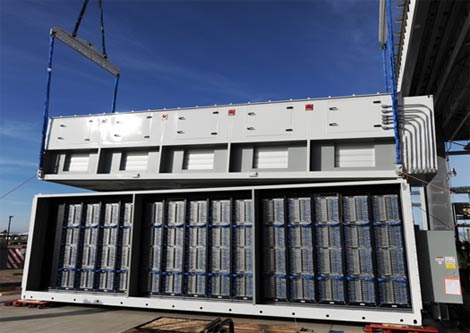
The shell of Dell’s MDC solution is formed by a steel frame, rather than a standard rigid shipping container. As a result of this design, Dell can deploy modules with different configurations to meet the needs of different customers. Each module houses up to 12 standard server racks and up to 2,500 servers. The design gives Tier5 the flexibility to mix and match hardware components within a module to better serve the specific needs of its customers.
The MDC solution contains two rows of custom-built racks with a center hot aisle, a design that allows easy access to components for servicing and maintenance. The module offers an easily accessible connection point for power and cooling as well as IT management. It also offers multiple cooling options, including chilled water, evaporative cooling and outside air. This enables users to choose the cooling option that works best for the site and the climate.
Keepin’ it green
Besides allowing Tier5 to be agile and not having to tie up capital until right before its needed, the MDC also saves on a tremendous amount of power. Tier5 estimates a best in class power usage efficiency (PUE) of 1.18 for the Adelaide modular data center. This in turn will result in their customers saving approximately AUD $8 million in power costs per year.
Where to next?
So the first third-generation Dell MDC has surfaced down under. Stay tuned to see where in the world the next one will pop up. 🙂
Last not but least in my series of videos from the OpenStackdesign summit, is an interview I did with David Lemphers of Price Waterhouse Coopers. David recently joined PWC as their director of cloud computing after spending six years at Microsoft, most recently as one of the principle engineers on the Windows Azure platform.
I talked with David to get his thoughts on OpenStack and here is what he had to say:
Some of the ground Dave covers:
Dave’s background
What he’s doing at PWC as the cloud director
Why decided to attend (and present at) the OpenStack summit and why he’s so bullish on the platform.

 – the cloud’s storage repository


 Posted by Barton George



 Barton's Blog
