How to Community

July 7, 2009

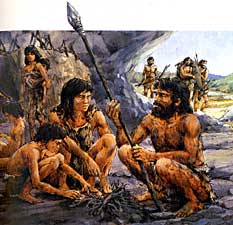
Obligatory cheesy cavemen community illustration.

Obligatory cheesy cavemen community illustration.

The concept of community is one that has been around for quite a while (see image at left).

Originally at least partially defined as a group that shared a common physical location, this term over the last decade, with the help of the Internet, has vastly expanded to include virtual communities.  (Obviously other media before the Net like radio, TV, snail mail and smoke signals have helped to knit together physically separated individuals, however the Net has simply done it on a much larger and more immediate scale).

Powering Software and Presidents

As for its power, it was the Community that became the central driver behind a “new” model of Software creation, Free and Open Source Software.  No longer was code solely written by a group of engineers holed up in a room and fed pizza by sliding it under the door.  It was written collaboratively by a community of mostly volunteers located around the world.  And in a very different arena,  it was the power of community that recently helped propel our current President to the White House.

Now with tools like Twitter and Facebook new communities are being created by the minute and companies and causes all want to know how to harness and leverage the power of community.  Marketing guru Seth Godin has even jumped on the bandwagon with his book “Tribes” an inspiring but content lite work discussing how ideas, people and leaders can be brought together to accomplish big things.

“I’m in charge here” doesn’t work for a Community

Although it may be obvious to some, the most important thing to know about a community is that its about influence and not control.  You can’t direct a community to do anything.  What you can do is provide great products, ideas etc that your community can get behind, promote and help make better.  Its about acknowledging their help and providing the tools and resources to help them help you.  As Max Spevack, the former Community Manager for Fedora Linux once told me, “It’s about the power of persuasion and ‘thank you.’”  Or as the motto of Obama’s field campaign states: “Respect. Empower. Include.”  [Note: this paragraph is recycled from a previous entry]

Learn How to Community

If you want to learn more from the folks actually doing it you may want to check out The Community Leadership Seminar that is being held on July 18-19  in San Jose, CA.   The event is the brainchild of Ubuntu Community manager Jono Bacon and is supported by O’Reilly events.  As the website says

The event pulls together the leading minds in community management, relations and online collaboration to discuss, debate and continue to refine the art of building an effective and capable community.

In true community fashion the majority of sessions will be an unconference format where the topics for discussion will be decided on the day and will be characterized by discussions as opposed to lectures.

And the cost — FREE.  So if you’re heading out to OSCON, which runs from July 20 to 24th, you may want to come out a couple days early.  Or you may just want to attend the event.  Its got an amazing list of attendees already signed up.

Pau for now…


James Duncan: From Reasonably Smart to Joyent

June 23, 2009

I’m attending Enterprise 2.0 here in Boston and although it’s relatively small, I’m finding it pretty interesting.  Case in point, James Duncan, Joyent‘s Director of platform strategy.  James is staffing Joyent’s pod at the event and an hour ago I dragged him away for a quick podcast.

Some of the topics James tackles:

  • How James got into the cloud in the first place.
  • From Fotango to Zimki to Canon to Ski bum (and his connection with Canonical’s Simon Wardley).
  • How a bad experience with Ruby and an epiphany with the Git version control system made him “Reasonably Smart
  • Open Source and JavaScript
  • Being Acquired by Joyent
  • What he see’s happening in the cloud in the next 12-24 mos.
  • How he enjoys the immediacy the cloud brings of taking a concept from idea to deployed app in hours rather than days and how, at the push of a button, it allows you to “hang your bits out for judgement.”

Pau for now…


Talking to Canonical’s KVM Kid — Dustin Kirkland

April 28, 2009

At Austin Cloud Camp on Saturday I ran into Ubuntu linux developer and Canonical employee, Dustin Kirkland.  Dustin is on the server developer team at Canonical and, as he explains it, focuses on various aspects of virtualization, the plumbing layer below cloud computing.  I grabbed Dustin for a few minutes and chatted with him about last week’s release and what he’s been working on.

Some of the topics Dustin Tackles:

  • KVM, Canonical’s hypervisor of choice
  • Ubuntu’s next release and its focus on Eucalyptus to enable companies to set-up their own EC2 compatible “private clouds” based on Ubuntu servers.
  • What Dustin likes most about cloud computing (hint: think green)
  • What he likes most about working at Canonical

Update: And on a related note — Eucalyptus goes commercial with $5.5M funding round

Pau for now…


Talking to Ubuntu’s Cloud Man

April 23, 2009

Today mark’s the release of Ubuntu 9.04, nee “Jaunty Jackalope,” and the debut of the Ubuntu Enterprise Cloud powered by Eucalyptus.

To get some insight into the release and what it means, I grabbed some time with Simon Wardley of Canonical.  Simon, who joined Canonical near the end of last year, is the person tasked with looking into cloud computing for the company in order to figure out what it means for them, what it means for the industry and ultimately, determining what Canonical should be doing about this change that’s occurring in our industry.

My interview with Simon (16:14)  Listen (Mp3) Listen (ogg)

Simon Wardley, setting the controls for the heart of the cloud.

Simon Wardley, setting the controls for the heart of the cloud.

Some of the topics Simon tackles:

  • How did Simon get his present job and what was he doing before?
  • When looking at adopting cloud computing three risks need to be evaluated
    • The risk of doing nothing (which should be balanced against the next two)
    • Transitional risk
    • Out sourcing risks
  • Cloud standards will emerge through the marketplace rather than via committee
  • Why Ubuntu went with Amazon EC2 and Eucalyptus.
  • Today’s release is a technical preview, “a starting point in a journey.”
  • For the “Karmic Koala” release due in October, they will be focusing on persistency, policies and portability.  They are also working with a bunch of management tool providers  to allow users a choice of how they want to manage their environment.
  • Whats coming next year in the cloud space:
    • A hybrid model: Private clouds that allow bursting between them and public clouds.
    • Portability between providers will become a big issue.
    • A lot of standardization at the infrastructure layer of the stack
    • An explosion of innovation
    • The IT department will face real governance issues
    • Open source will continue to be critically important

Pau for now…


Mark Shuttleworth dicusses the Cloud and Ubuntu

March 30, 2009

Last month Mark Shuttleworth, founder of Ubuntu Linux, CEO of Cannonical Ltd and First African in Space, announced that Ubuntu was going to be making a big push into cloud computing with their release slated for October.  This will add to early cloud support that’s debuting in next month’s release, Ubuntu 9.04.  (BTW, For a good backgrounder on Mark and Ubuntu, check out Ashlee Vance’s story in the New York Times from January).

I  was interested to get some more details so I reached out to Mark to find out his master Cloud plan, his thoughts on Cloud Computing today and where he thought it was going.  This is what he had to say:

My interview with Mark (9:51)  Listen (Mp3) Listen (ogg)


Mark and myself at the Ubuntu Developer Summit in Boston at the end of ’07 (Mark’s the one without the “Barton” name tag.)

Some of the topics Mark Tackles:

  • Ubuntu has picked two anchor points for its cloud strategy: Amazon EC2 and UCSB‘s (go Gauchos!) Eucalyptus.  Eucalyptus is for those looking to create “private clouds” on their own and on the Amazon side they are making it easy for users to plug into EC2 as well as offering folks the ability to run Ubuntu-based machines on their cloud.
  • Why they went with EC2 and Eucalyptus.  On the Eucalyptus side it has to with it being Java-based, which meshes nicely with the work Ubuntu did with Sun to get the Java stack “straightened out” on Ubuntu for  app servers.
  • The constraints that EC2 imposes actually make it more interesting by providing discipline, much in the same way that http applied the discipline of being completely connectionless.
  • We haven’t yet seen the “definitive cloud” in  the way that Google came along and captured the spirit (and revenues) of the web.  It will still be 5 -10 years before the cloud computing is nailed.
  • Portability in the Cloud is key if we want to avoid gross lock-in issues.  People are trying to tackle this in a variety of ways but it makes sense to look at the way http came to dominance.
  • Any truth to the rumor that Google is planning on using Ubuntu as a Netbook OS? (listen how Mark deftly responds 🙂
  • Last time we spoke, back in August, Mark said he was looking at profitability in 18 months to two years, is he still on track?

Pau for now…

Update: Here is the Register article based on the above podcast.


Blueprint: Built of Java thanks to Google Web Toolkit

October 14, 2008

The great thing about cloud-based applications is that it doesn’t matter what they’re written in or how they’re constructed, all that matters is that they do what you need them to.  What’s the back-end of your phone system written in?  Odds are you don’t know and don’t care.

That being said, there are group of folks, lets call them “developers” who are interested in what goes on behind the curtain.  For that group of people and others who find this kind of thing interesting and informative, read on.

What to build Blueprint out of?

When the team first started developing Lombardi Blueprint, they began with Java on the back-end and a combination of HTML and Flash on the front end.  When, due to plug-in issues, this didn’t work they moved to pure HTML and JavaScript using Dojo.  This too had its issues, namely performance and a lack of visibility.

Around this time Google Web Toolkit (GWT) 1.3 was released and the team decided to give it go.  This turned out to be the right choice.  GWT, which compiles Java code into JavaScript as you go,  enabled the team to write both the back and front ends in 100% Java.

GWT, which was originally released in May of ’06, is 100% open source licensed under the Apache License 2.0.

Here’s a good entry posted by Olivier Modica, the Blueprint engineering manager that simply lays out the advantages that GWT provides the Blueprint team: How GWT is enabling Blueprint’s agility.

Gory Detail and Extra-credit reading

If you really want to dive into what the team did with GWT and Blueprint, check out the video of the talk Alex Moffat, lead architect on Blueprint, and Damon Lundin gave at Google I/O back in May.

Also if you want to learn more about the performance of the recently released GWT 1.5, check this out:  Blueprint and the Performance of the GWT 1.5 Hash Map

Pau for now…